
India’s Clean Energy RD&D Tracker
Public Investment and Activities Across Technologies, Institutions, and Innovation
However, how much of that supports clean energy, and where those investments go and what they are spent on, has remained difficult to understand.
This tracker brings together publicly available information on India's clean energy research, development, and demonstration (RD&D) ecosystem, enabling users to explore patterns in funding, institutional participation, technology priorities, and innovation.
INDIA’S CLEAN ENERGY SECTOR AS OF 2026
₹1,443 cr.BUDGET
1,300+PROJECTS
90+INSTITUTES
This evolving database of publicly funded clean energy RD&D projects is compiled through systematic desk research. It captures projects undertaken between FY2019–FY2024, for which sufficient information is publicly available. It will be updated periodically as new information becomes available. Coverage depends on the information released by funding agencies and research institutions and should be interpreted as such.




1. ALLOCATION OF PUBLIC FUNDING

2. KEY FUNDERS AND INSTITUTES

3. EVOLUTION OF PORTFOLIO

4. INNOVATION IN CLEAN ENERGY

DEGREE OF INNOVATION
TYPE OF INNOVATION
About this Data
The database was developed through systematic desk research of publicly available information from research institutions, universities, national laboratories, funding agencies, and government programme documents.
Inclusion criteria: Projects were included where research was either happening at a public institute or the funding agency was a public entity and the project appeared in an annual report, sanctioned-project list, or programme document available in the public domain. Each project appears once in the dataset. We identified duplicates by matching title, institution, year, and budget, and consolidated them using the most complete record when the same project appeared under multiple disclosures with slight variations.
Classification: Each project has been classified along four dimensions based on project titles and available descriptions:
- Technology category: one of seven, designed for internal consistency and broad comparability with the International Energy Agency (IEA) RD&D Data Explorer taxonomy.
- Subcategory: a themed grouping within each technology (for example, Solar PV, Battery Technologies, Hydrogen Production).
- Degree of innovation: incremental or radical.
- Type of innovation: product-oriented or process-oriented.
Reporting window: The tracker covers FY2019-FY2024. Annual reports and funder disclosures for FY2025 onwards remain either unpublished or only partially released across the sources reviewed at the time of compilation. The tracker will be extended as complete reporting for subsequent years becomes available.
Cite this page: Sustainable Futures Collaborative. 2026. India Clean Energy RD&D Tracker. Interactive database. New Delhi: Sustainable Futures Collaborative.
Limitations
The tracker draws on available public information, but the underlying data has meaningful limitations that should inform how readers interpret the figures.
- Institutional reporting is uneven: Some publicly funded institutions do not release annual reports, publish them irregularly, or make only summary versions available. Projects at these institutions are captured only where they appear in a funder's disclosure.
- Where reports exist, the level of detail varies: Some institutions list every sanctioned project with title, principal investigator, funder, and budget. Others report only aggregate research spending, or list projects without budgets. The dataset reflects what was available.
- Budget and timeline data are incomplete: Budget information is unavailable for approximately 16% of projects, while timeline information is unavailable for approximately 39%. For budgets, where reported, figures represent declared expenditure at the time of sanction rather than audited spending and are not inflation-adjusted.
- Undisclosed projects are not captured: Publicly funded projects that were not mentioned in an annual report, sanctioned-project list, or programme document are not represented. The scale of unreported activity cannot be estimated.
- Private-sector research is not captured: Private companies rarely disclose research publicly. This tracker therefore represents only the public research system.
- Demonstration and industry-linked work is systematically undercounted: Institutional annual reports tend to emphasise laboratory research that produces publications. Prototype development, pilot testing, and industry collaboration are reported less consistently, even where they exist.
- Classification involves interpretive judgement: Where project descriptions were brief or ambiguous, classification is inherently interpretive; other analysts might reasonably reach different conclusions on some entries.
- Funding agency and institutional records are not fully aligned: Funding agencies do not consistently publish project-level information identifying recipient institutions, while institutional reports do not always specify funding sources. Consequently, funding allocations cannot always be reconciled with institution-level research activities.
- Multi-institution projects present reconciliation challenges: Collaborative projects sometimes appear separately in each participating institution's records. Obvious duplicates have been consolidated, but institution-level counts may not perfectly reconcile with project totals.
The tracker is intended to make a fragmented and unevenly reported landscape more visible, in a form that supports comparison and interpretation. Improved public reporting by institutions and funders would substantially strengthen future iterations, and encouraging such reporting is among the tracker's aims.
Sources Consulted
Funding agencies: Department of Science and Technology (DST); Ministry of New and Renewable Energy (MNRE); Council of Scientific and Industrial Research (CSIR) and constituent laboratories; Ministry of Electronics and Information Technology (MeitY); Ministry of Education; Central Power Research Institute (CPRI); Indian Space Research Organisation (ISRO); Department of Biotechnology (DBT); Defence Research and Development Organisation (DRDO); Anusandhan National Research Foundation (ANRF); Solar Energy Corporation of India (SECI).
Institutional sources: Annual reports and institutional disclosures from All Indian Institutes of Technology (IITs), National Institutes of Technology (NITs), Indian Institutes of Information Technology (IIITs), Indian Institutes of Science Education and Research (IISERs), Indian Institute of Space Science and Technology (IIST), Indian Institute of Science (IISc), National Institute of Solar Energy (NISE), Central Power Research Institute (CPRI), International Advanced Research Centre for Powder Metallurgy and New Materials (ARCI), Automotive Research Association of India (ARAI), Solar Energy Corporation of India (SECI), Centre for Materials for Electronics Technology (C-MET), Sardar Patel Renewable Energy Research Institute (SPRERI), and CSIR laboratories, and other publicly funded research organisations.
A full source list with URLs is provided in the accompanying report.
Team
Research team
Kashmeera Patel, Aman Srivastava, and Easwaran J Narassimhan
Communications team
Sonali Verma and Kartikeya Jain
Data visualisation and design by
Revisual Labs

Related Publications

Blogs
Climate Policy
India’s Solar Crossroads: Borrowing Innovation or Building Its Own?
Kashmeera Patel, Aman Srivastava and Easwaran J Narassimhan
29 September 2025
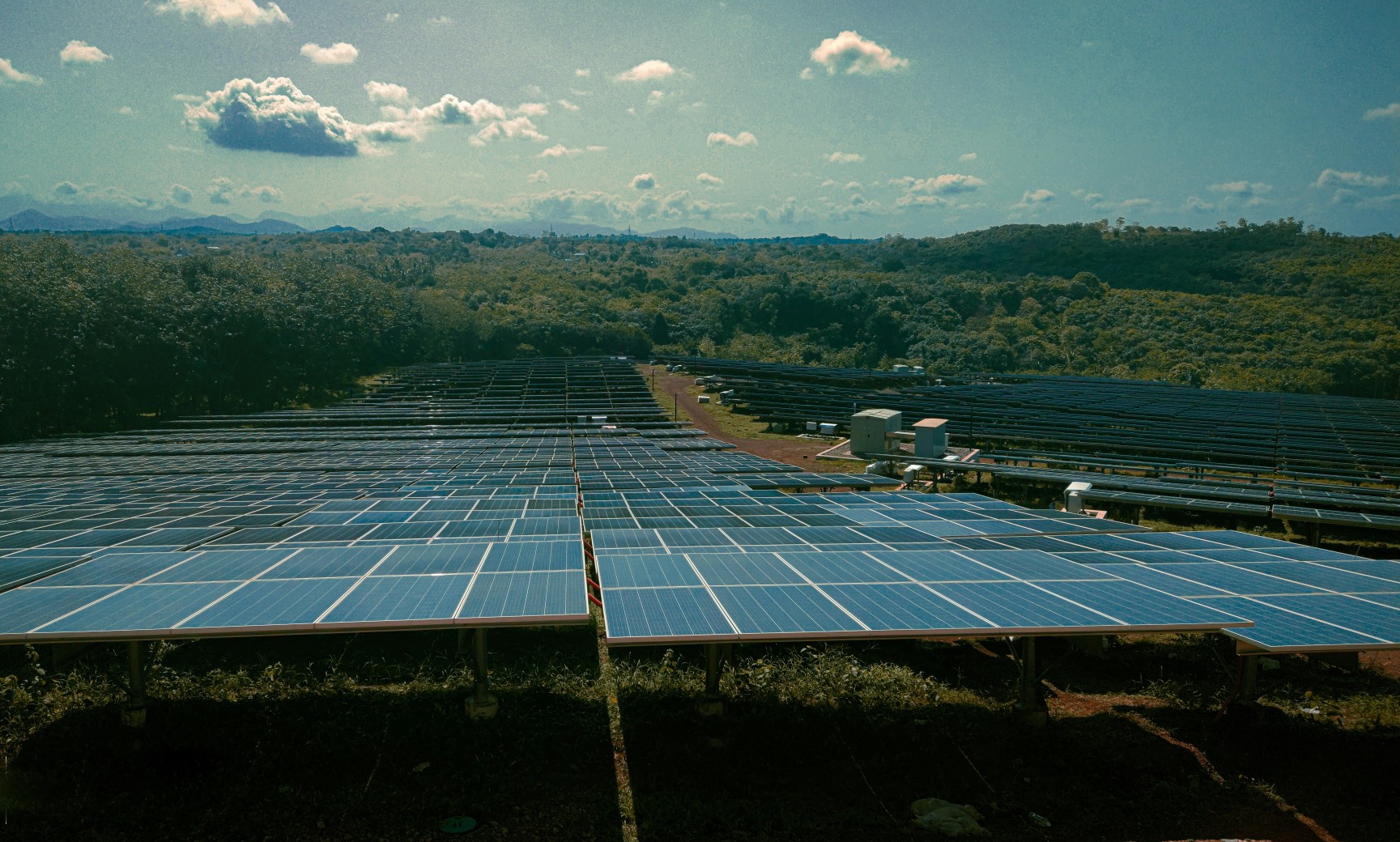
Behind the 100 GW milestone lies a structural vulnerability: India’s solar research, development, and demonstration (RD&D) base is still evolving and leans heavily on imports, leaving the country exposed to supply-chain shocks and sovereignty risks. We map India’s public solar RD&D landscape and analyse whether the country should align with global trajectories or carve out its own leadership.
Blogs
Climate Policy
One Lakh Crore for Innovation: Getting Strategic About Clean Energy R&D
Kashmeera Patel, Aman Srivastava, and Easwaran J Narassimhan
11 July 2025
The blog examines the Union Cabinet’s recent approval of the ₹1 lakh crore Research, Development and Innovation (RDI) Scheme through the lens of what it could mean for India’s clean energy innovation landscape and green industrial policy.
Show more