

Sony R K
Associate Fellow, Adaptation and Resilience


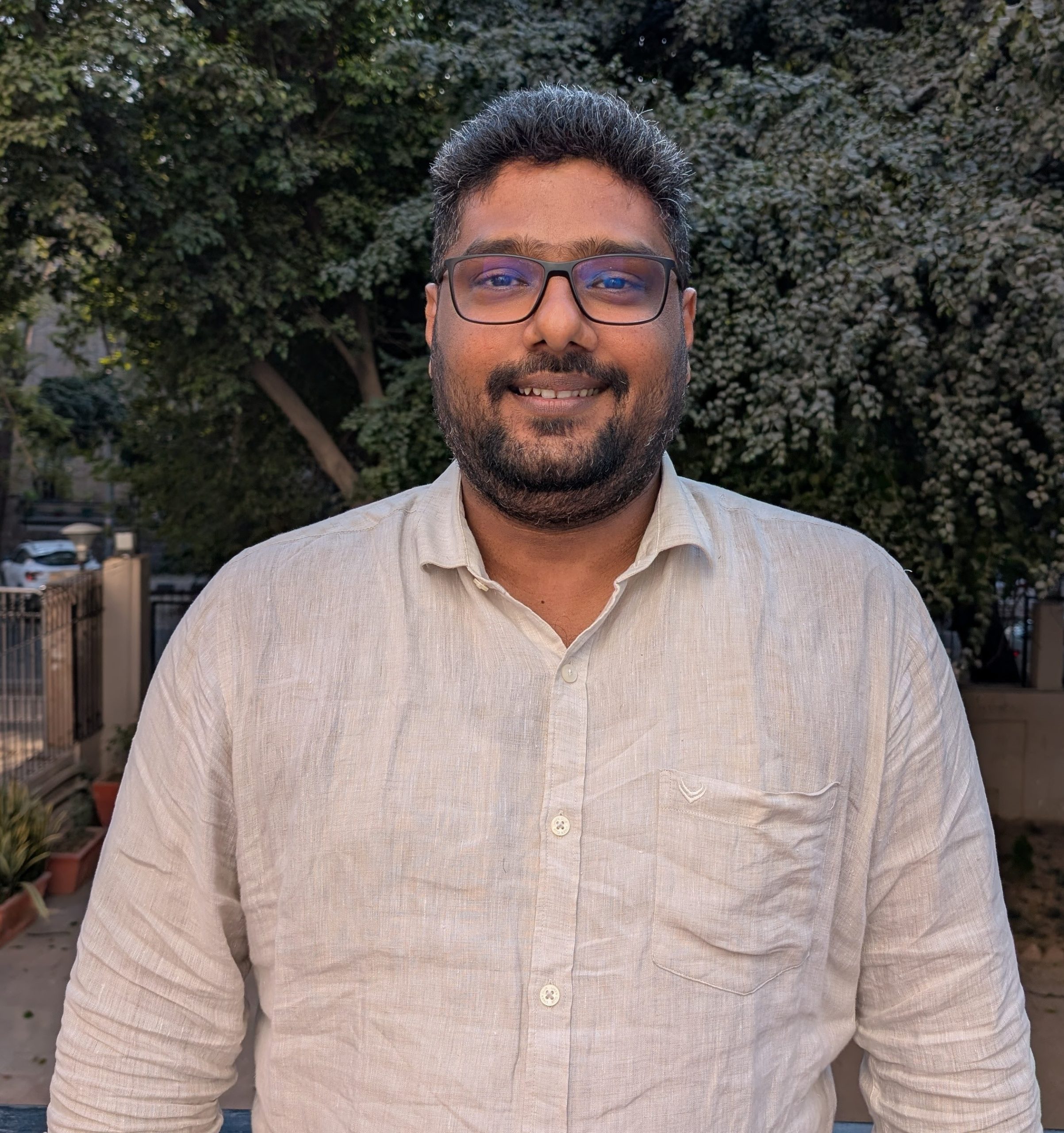
Dr Sony R K is an Associate Fellow in the Adaptation and Resilience vertical at the Sustainable Futures Collaborative (SFC). He works at the intersection of conservation, development, and action, with research interests spanning environmentalism, environmental politics and justice, agroecology, and climate adaptation and resilience. Previously, he was a Senior Manager at the Food and Land Use Coalition (FOLU) at World Resources Institute India, where he led initiatives on sustainable and regenerative agriculture, nature-based solutions, and food systems transformation. Earlier, Dr Sony has worked with various research institutions and NGOs, including Kerala Forest Research Institute (KFRI), Salim Ali Centre for Ornithology and Natural History (SACON), ICLEI South Asia, and Winrock International India. His work in these organisations has included studying mammal ecology in the Western Ghats, mainstreaming biodiversity into urban governance, assessing habitat degradation and conducting environmental impact assessments in the Western Himalayas. In addition to his research and policy work, he has served as a visiting faculty at Ashoka University, New Delhi, and Transdisciplinary University, Bengaluru. Dr Sony holds a PhD in Conservation Science and Sustainability Studies from the Ashoka Trust for Research in Ecology and the Environment (ATREE), Bengaluru and Manipal Academy of Higher Education. He also has a Master’s degree in Zoology from Goa University.
Publications

Opinions
Adaptation and Resilience
India Needs a Just Adaptation Agenda
Ishan Kukreti, Sarada Prasanna Das, and Sony R K
Mongabay | 6 October 2026
Climate impacts are reshaping India's economy, yet adaptation is often assumed to be inherently just. India's first National Adaptation Plan must make justice enforceable, with statutory community consultation, vulnerability-weighted budgets across sectors, and independent monitoring of who benefits, so resilience reaches those most exposed rather than just those most visible.
Opinions
Adaptation and Resilience
Wayanad’s Warning: Climate-proofing India’s Environmental Impact Assessment Framework
Neha Miriam Kurian and Sony R K
The Wire | 11 August 2026
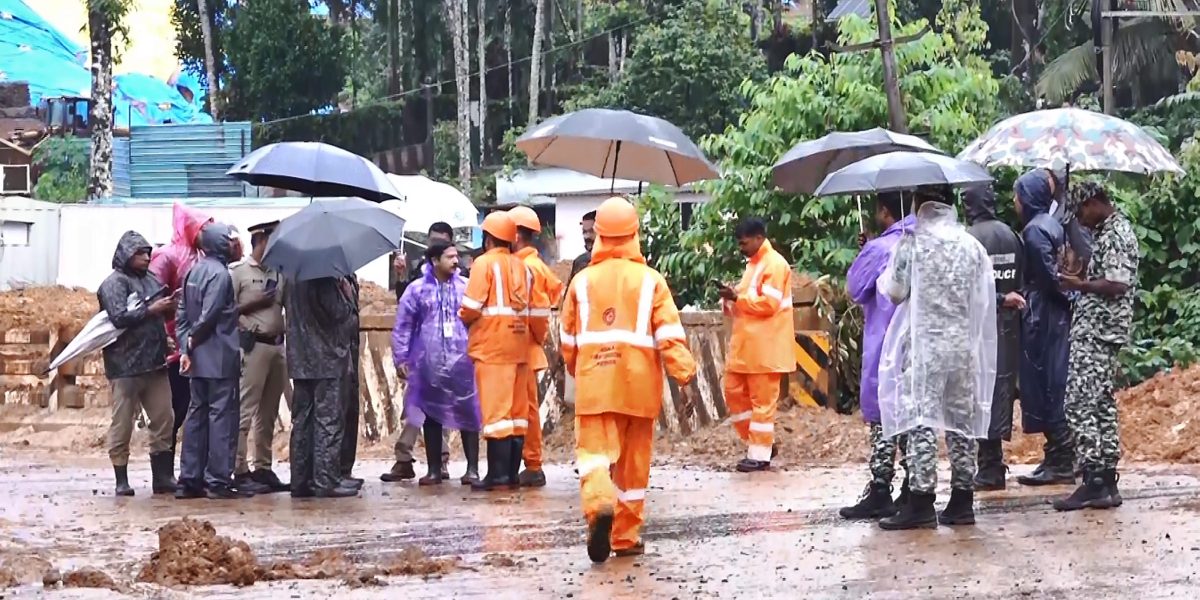
Climate considerations should become a routine part of scoping, with proper examination of how projected rainfall, temperature, and other climate variables may alter the environmental impacts of projects and pose risks to the project and local populations.

Opinions
Adaptation and Resilience
India’s coastal risks no longer arrive in isolation
Sony R K
Deccan Herald | 13 June 2026
Policy must approach coastal hazards as interlinked risks, not disconnected events, to build lasting resilience.
Opinions
Adaptation and Resilience
When Mangroves Do What Seawalls Cannot
Jui Gusani and Sony R K
The Hindu | 5 June 2026
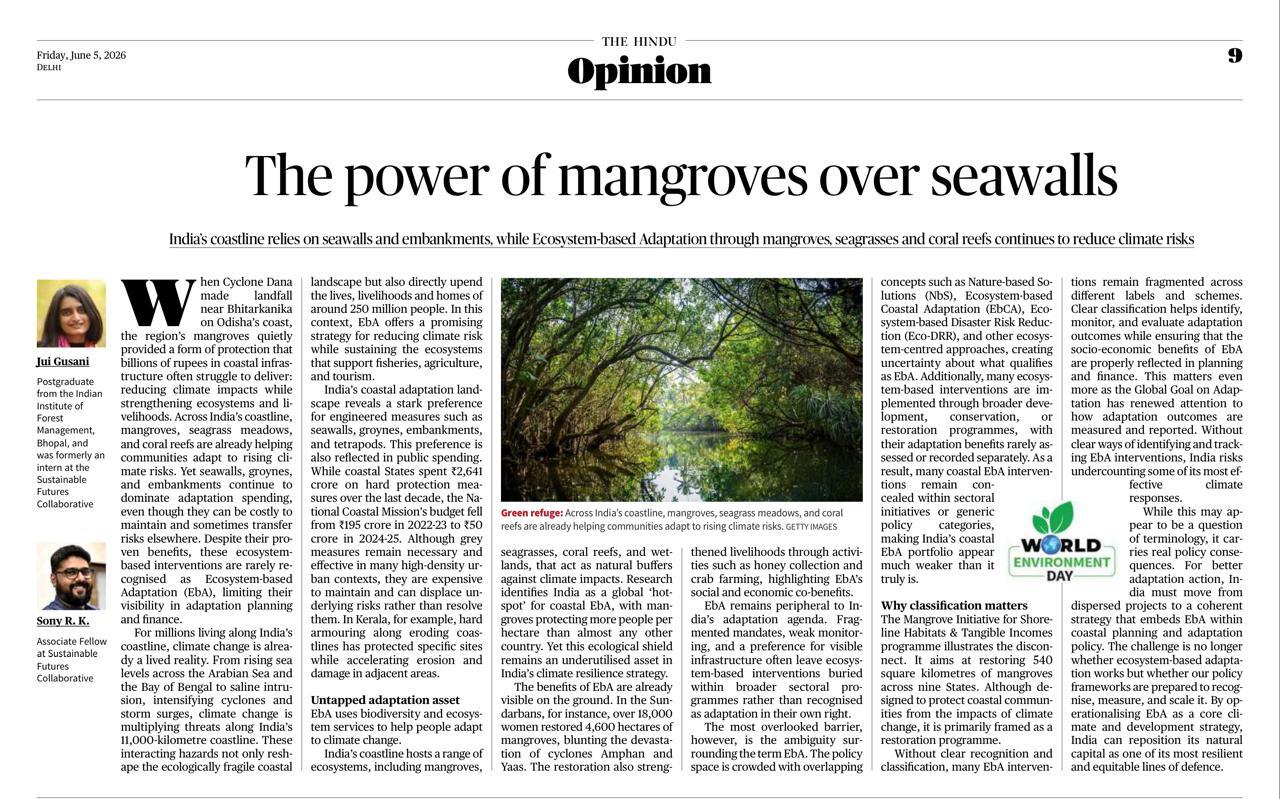
Jui Gusani and Sony R K write on how India’s coastline relies on seawalls and embankments, while ecosystem-based adaptation through mangroves, seagrasses, and coral reefs continues to reduce climate risks.

Issue Briefs
Adaptation and Resilience
Strengthening Coastal Resilience in India: A Multi-Hazard Approach to Adaptation Governance
Sony R K and Escandita Tewari
31 March 2026
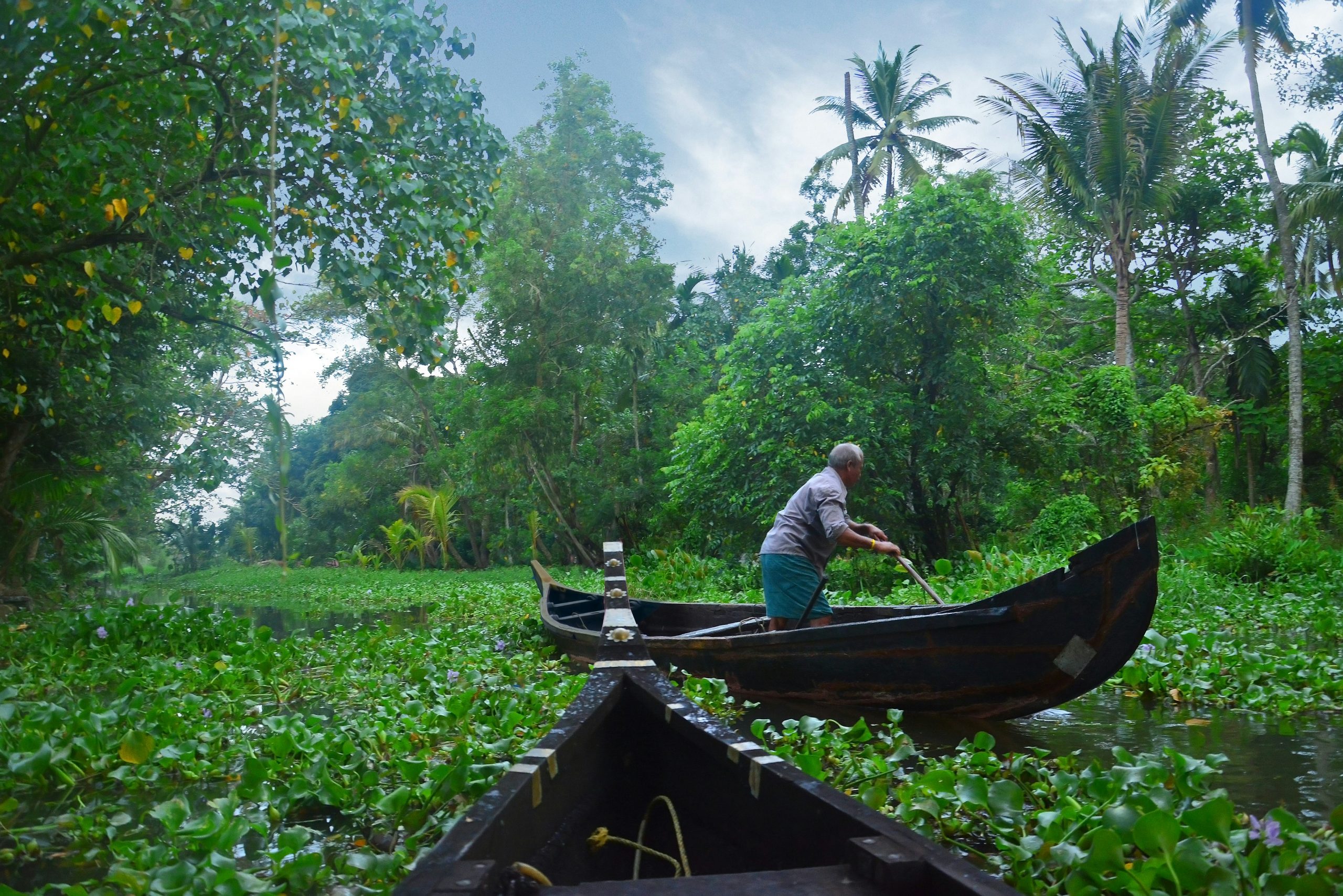
Interactions between acute coastal hazards such as cyclones and storm surges, and chronic coastal hazards such as sea-level rise, amplify impacts across social and ecological systems. A continued reliance on single-hazard planning can result in blind spots and maladaptation. We explore why strengthening coastal resilience in India requires moving beyond this reliance and adopting a multi-hazard approach to adaptation that integrates our understanding of interacting coastal hazards.
Opinions
Adaptation and Resilience
Labour, Nature and Capitalism: Exploring Labour-Environmental Conflicts in Kerala, India by Silpa Satheesh (2025): A Review
Sony R K
Doing Sociology | 22 September 2025
Silpa Satheesh’s book, ‘Labour, Nature, and Capitalism: Exploring Labour - Environmental Conflicts in Kerala, India’ makes a significant contribution to understanding how environmental conflicts unfold in contexts marked by economic precarity and institutional complicity. It offers a nuanced perspective from the Global South on how material interests, ideological alignments, institutional power, and contested understandings of nature shape ecological struggles.