
Environmental Governance and Policy
Air pollution
Delhi’s Air Push Needs Delivery to Line up with Intent

27 July 2026
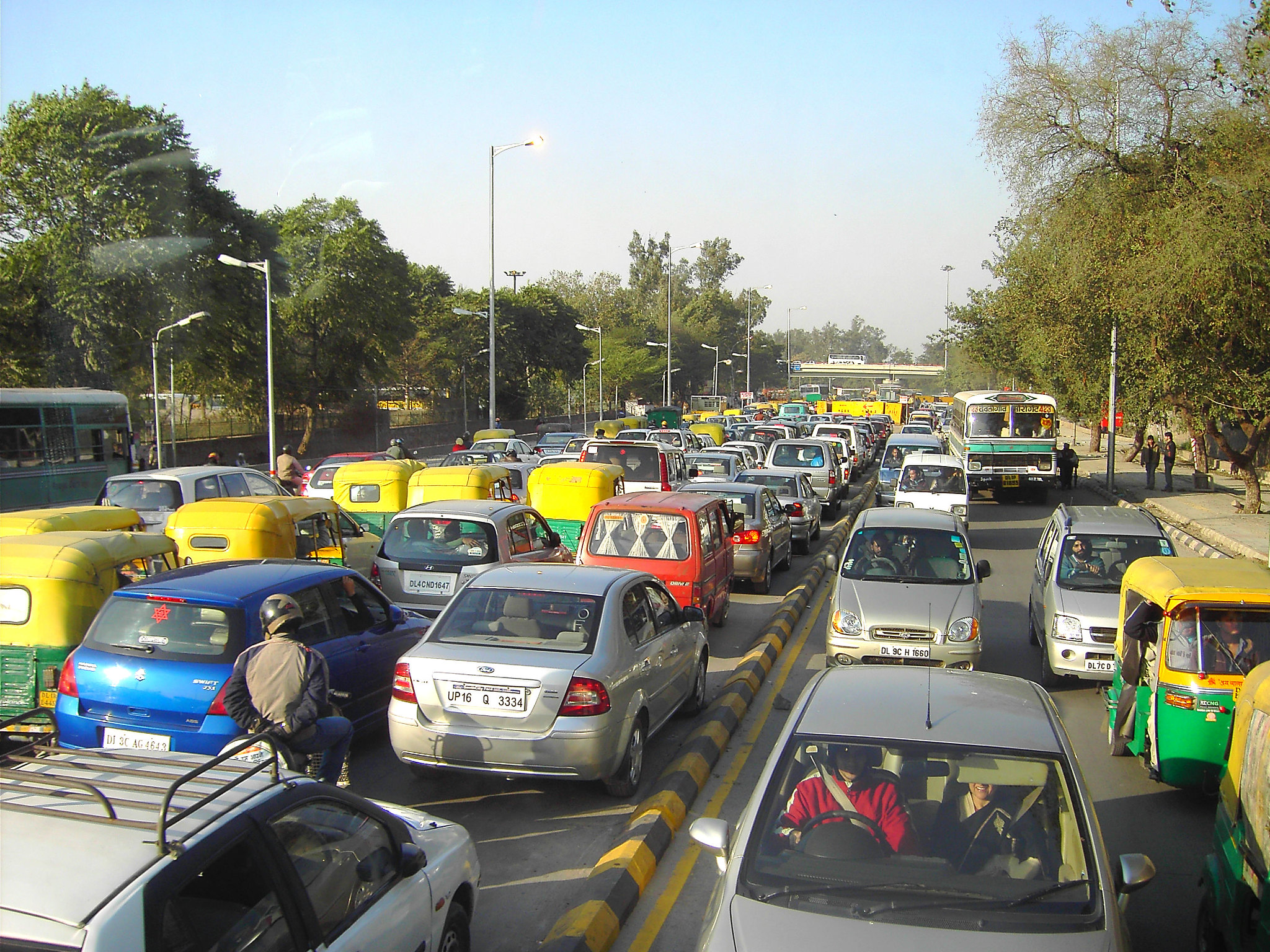
Credit: Flickr/Denisbin CC BY-ND 2.0
Delhi has started treating its air as a year-round problem, not just a winter emergency, and transport emissions, the one source that pollutes just as much in June as in December, are rightly at the centre of that shift. A cluster of new measures, from an ambitious Electric Vehicle Policy to a consolidated Winter Action Plan and a large World Bank-supported clean-air programme, marks a shift from episodic response towards sustained, source-focused action. The direction of travel is right; what it needs now are adjustments that would allow the government to deliver on its goals.
It is winter when Delhi’s air is at its worst, when cold, still air and a low mixing layer trap primary particulate matter emissions near the ground and drive the chemistry that forms secondary particulate matter – the toxic fine particles that condense from gases like nitrogen oxides emitted by vehicles. But summer no longer offers relief. The city has seen high levels of ground-level ozone, a byproduct of heat and sunlight reacting with nitrogen dioxide and volatile organic compounds emissions. Transport feeds both, which is why the only durable cure is cutting its emissions year-round. The sector accounts for 20-25% of Delhi’s fine particles (PM2.5) year-round, unlike dust and crop-residue smoke that are seasonal and transient, and it is also a leading source of nitrogen oxides that drive secondary particle formation12.
The recent measures each aim for a different part of this persistent problem. The Electric Vehicle Policy phases out new petrol- and diesel-powered two- and three-wheelers and backs its mandates with incentives3. The Centre’s Naya Safar scheme replaces ageing trucks and buses that pollute disproportionately relative to their numbers across Delhi, Haryana, Rajasthan and Uttar Pradesh4. The World Bank-supported Clean Air, Healthy Delhi programme funds a seven-year, source-by-source effort.5 At the same time, the Winter Action Plan folds once-scattered and often unpredictable seasonal orders into a single instrument6. Together, these signal genuine intent. Delivering on this intent requires three tweaks and a fourth to track whether these new interventions have directly contributed to improvements in air quality.
First, the deferred mandate to support four-wheelers under the EV policy has presented an opportunity to make the fleet not just cleaner but leaner. Incentives graduated by vehicle weight, footprint, and energy efficiency (kilometres per kilowatt-hour) would steer buyers away from the heavier electric SUVs that shed the most particulates from tyre and road wear7 and take up the most road and parking space in a city short of both. This is worth considering before the mandate is formally declared and electric SUV production is locked in.
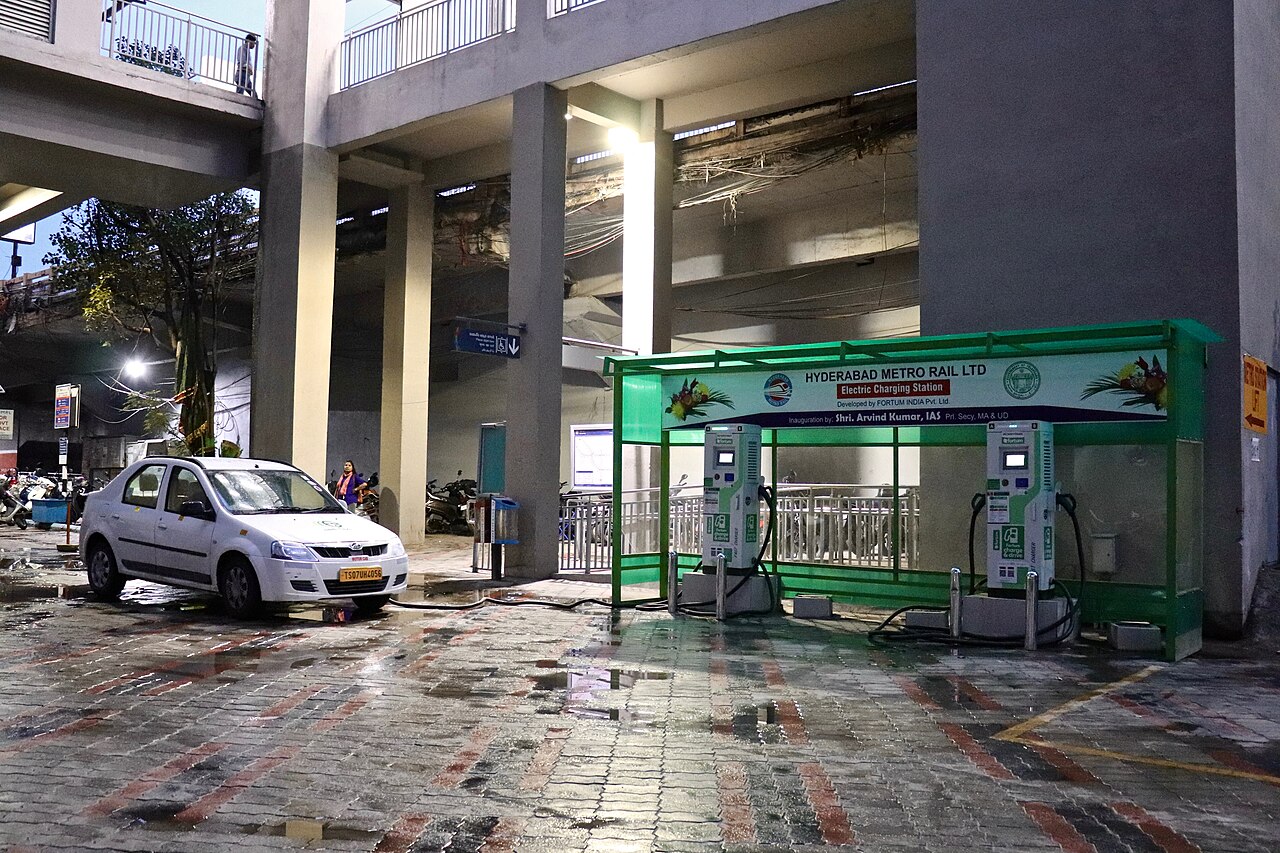
Second, restrictions are more likely to succeed once alternatives are in place. Delhi saw this last July, when denying fuel to end-of-life vehicles was withdrawn within days, undone by public anger and an enforcement system that could not yet read number plates across state lines8; the same unreadiness has just forced Hanoi, Vietnam, to water down a far more ambitious petrol-vehicle ban9. Charging, like the CNG switch two decades ago, is at heart an energy-supply problem, and the fix is to build the supply first — reliable public chargers and a real right and ability to charge at home.
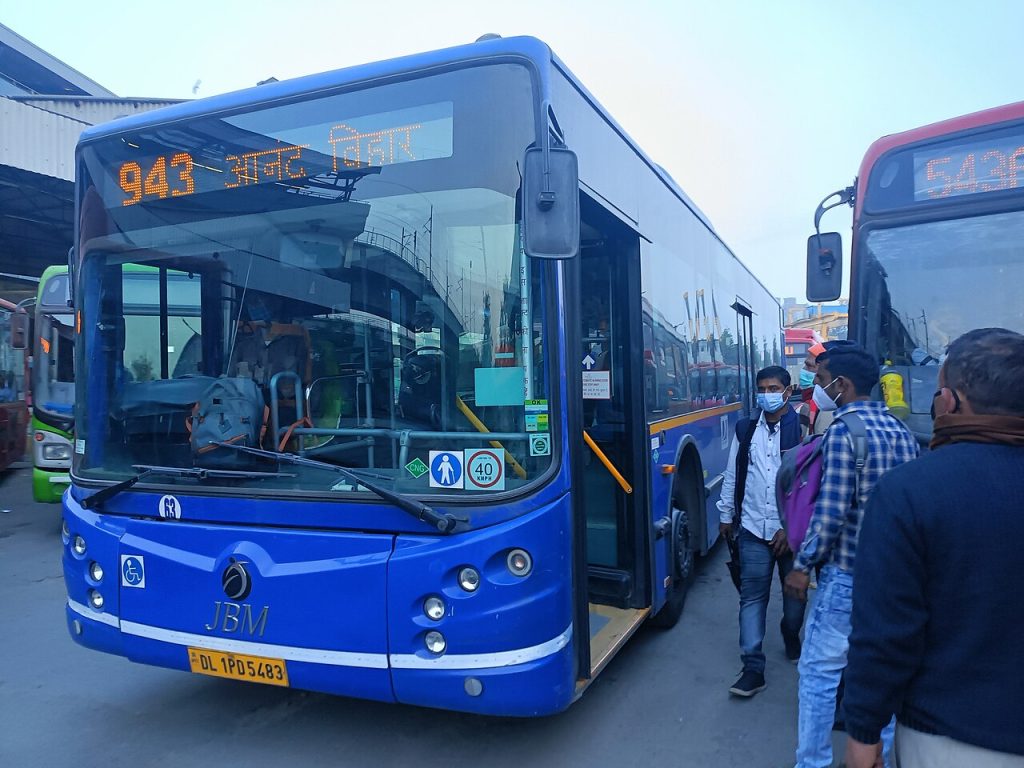
Third, none of these fundamentally change why Delhi runs on so many private vehicles. An electric car occupies the same lane and space as a petrol or diesel car and does nothing for congestion, urban sprawl, asphalt-driven heat islands, or the daily danger to pedestrians. The larger prize remains a network built around buses and the metro, with routes rationalised to feed the metro and cover both under-served peripheries and the short trips it misses. Alongside, the footpaths, shade, lighting, and safe crossings that make walking and waiting bearable must also be built and maintained. The Chief Minister’s Metro Monday is a welcome signal10 but requires the supporting infrastructure designed to aid daily commuters.
Finally, none of this can be focused on Delhi alone, or judged only by how much money is allocated or spent. Roughly two-thirds of the city’s fine particles come from beyond its borders11, according to CAQM’s own analysis. Hence, the World Bank programme and Naya Safar matter most for what they do to bring Haryana, Uttar Pradesh, and Rajasthan onto the same path12, and the real test is whether the region acts as a single system. Monitoring, too, must track what these transitions add, not only what they remove — the non-exhaust particles from a heavier electric fleet and the toxic aldehydes from ethanol-blended petrol. It must reward verified results alongside disbursement metrics.
Cleaner air and a more liveable city have never been separate projects: fewer, cleaner and lighter vehicles, improved public transport, and streets built to serve people rather than vehicles result in better air quality while making the city both safer and more desirable to live in. The cause to do both has always existed; what is new is the intent and the instruments, and the work now is to sustain the momentum while improving effectiveness.
Endnotes
- S. Guttikunda et al., What Is Polluting Delhi’s Air? A Review from 1990 to 2022, Sustainability 15(5): 4209 (2023). https://www.mdpi.com/2071-1050/15/5/4209 ↩︎
- Commission for Air Quality Management, Identification of the Causes for Worsening AQI in Delhi-NCR (January 2026). https://caqm.nic.in/WriteReadData/LINKS/AQI%20Report%20V5%20Final637d7a8a-8dad-44fb-9c8c-8be0dfe42839.pdf ↩︎
- Transport Department, Government of NCT of Delhi, Delhi Electric Vehicle Policy, 2026 (30 June 2026). https://transport.delhi.gov.in/sites/default/files/Transport/circulars-orders/delhi_ev_policy_2026-30_0.pdf ↩︎
- Press Information Bureau, Cabinet approves Scheme for support to NCRPB for replacement of old trucks and buses in Delhi-NCR (3 June 2026). https://www.pib.gov.in/PressReleasePage.aspx?PRID=2268342®=3&lang=1 ↩︎
- Delhi govt to launch Rs 8,300-crore ‘Clean Air, Healthy Delhi’ project with help of World Bank, ThePrint (3 July 2026). https://theprint.in/environment/delhi-govt-rs-8300-crore-clean-air-healthy-delhi-project-world-bank/2976914/ ↩︎
- Department of Environment and Forests, Government of NCT of Delhi, Directions for Air Pollution Control in Delhi (Notification F. No. 10(39)/ENV/2021) (23 June 2026). Gazette ID: SG-DL-E-01072026-273956. https://egazette.gov.in/(S(kk0xjv3gequbeq0g0yipkr2f))/ViewPDF.aspx ↩︎
- A. Karkun, Can EVs Solve India’s Air Pollution Crisis?, Environmentality (9 December 2021). https://web.archive.org/web/20211214105528/https://environmentality.cprindia.org/blog/can-evs-solve-the-air-pollution-crisis ↩︎
- Fuel Ban on EOL Vehicles in Delhi and Five NCR Districts Pushed to November 1, The Wire (8 July 2025). https://m.thewire.in/article/environment/fuel-ban-end-of-life-vehicle-pushed-to-november-1 ↩︎
- Hanoi Delays Gas-Powered Motorcycle Ban in City Centre, Vietcetera (16 May 2026). https://vietcetera.com/en/hanoi-delays-gas-powered-motorcycle-ban-in-city-centre ↩︎
- Rekha Gupta takes Delhi Metro ride under ‘Metro Monday’ campaign, The Pioneer (18 May 2026). https://dailypioneer.com/news/slug-lite/rekha-gupta-takes-delhi-metro-ride-under-metro-monday-campaign?year=2026 ↩︎
- Commission for Air Quality Management, Identification of the Causes for Worsening AQI in Delhi-NCR (January 2026), on the share from outside Delhi. https://caqm.nic.in/WriteReadData/LINKS/AQI%20Report%20V5%20Final637d7a8a-8dad-44fb-9c8c-8be0dfe42839.pdf ↩︎
- World Bank, India: World Bank Approves Financing for Programs to Promote Clean Air in Haryana and Uttar Pradesh States (10 December 2025). https://www.worldbank.org/en/news/press-release/2025/12/10/india-world-bank-approves-financing-for-programs-to-promote-clean-air-in-haryana-and-uttar-pradesh-states ↩︎