
Climate Change and Development: A Bottom-Up Approach to Mitigation for Developing Countries
Summary
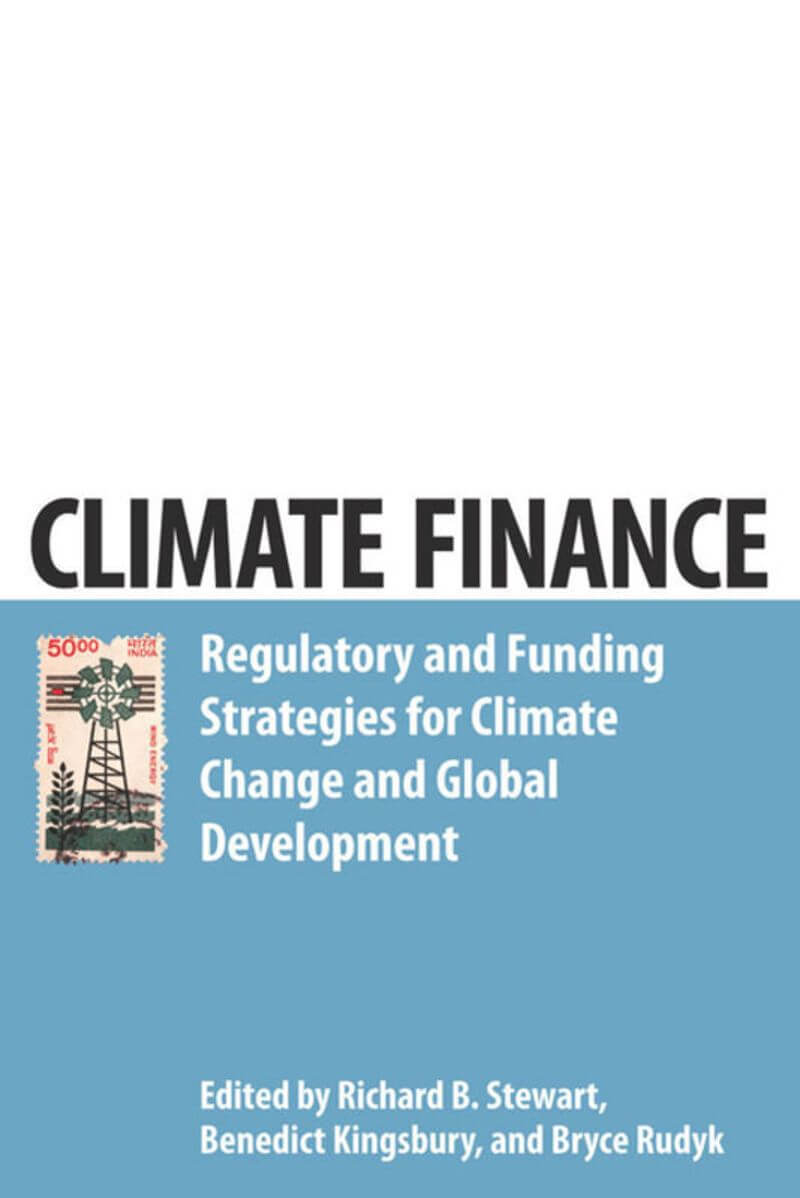
A top-down approach – with internationally specified and binding national targets and timetables – has long been the preferred position of environmental advocates. But bottom-up approaches, such as policy measures to be devised on a country-by-country basis, have also been part of the policy grammar of the climate negotiations. For those who put climate change mitigation first (as opposed to those who seek to preserve sovereignty, or emphasize untrammeled economic growth), a focus on targets and timetables is an article of faith. This chapter in ‘Climate Finance: Regulatory and Funding Strategies for Climate Change and Global Development’ suggests that focusing in the short run on explicit caps (or the implicit caps of climate plans) for developing countries is a misguided policy. It will not produce predictability of future emissions from current baselines, and in the short to medium term may be misguided for environmental reasons. Top-down approaches risk creating counterproductive incentives, such as incentives to set overly high emissions targets or to avoid early action. They may, in practice reduce, rather than increase, the predictability of emissions levels and of emissions reductions against BAU baselines or meaningful targets. The paper argues that strengthening domestic institutions in developing countries is needed for successful low-carbon development.
 Download the Study

Related Publications

Reports
Climate Policy
How Can India Align Its Clean Energy Innovations with Its Ambitions? An Assessment of Public RD&D Investments and Activities
Kashmeera Patel, Easwaran J Narassimhan, and Aman Srivastava
15 October 2026
This report examines India’s public clean energy RD&D investments across six key technologies to assess whether public cleantech RD&D innovations align with its broader clean energy, industrial, and climate ambitions.

Climate Policy
Climate Litigation and Democratic Governance in India
Shibani Ghosh
International IDEA | 5 October 2026
Climate litigation is emerging as an important avenue for addressing environmental harms and strengthening accountability in India. As climate-related challenges intensify, courts are increasingly being called upon to consider how constitutional rights, environmental protection, and democratic governance intersect. This case study examines the evolving climate litigation landscape in India and explores its implications for public participation, access to justice, and government accountability. It is part of a series on climate litigation and democracy in Asia and the Pacific, which examines how legal action is shaping participation, accountability, and rights-based responses to climate change.

Issue Briefs
Climate Policy
India’s Electric Vehicle Ecosystem: Stuttering Transition or Strategic Reorientation?
Arunesh Karkun, Kashmeera Patel, Aman Srivastava, and Easwaran J Narassimhan
11 August 2026
An analysis of the evolution of India’s EV policy landscape, the current state of domestic manufacturing, and the strengths and limitations of its RD&D ecosystem.