Noah Scovronick PhD, Jinyu Shiwang MS, Maddalena Ferranna PhD, Fabian Wagner PhD, Frank Errickson PhD, Dan Tong PhD, Xizhe Yan MS, Prof Navroz K Dubash PhD, Prof Yang Liu PhD, Bhargav Krishna DrPH, Marc Fleurbaey PhD, Pengfei Wang PhD, Shaouhui Zhang PhD, Gregor Keisewetter PhD, Steven J Smith PhD, Francis Dennig DPhil, Wei Peng PhD, and Mark Budolfson PhD

Climate Policy
| The Lancet Global Health |17 March 2026
Global Climate Justice and the Future of Air Quality Co-Benefits in Low-Income and Middle-Income Countries: An Energy, Climate, and Health Modelling Study
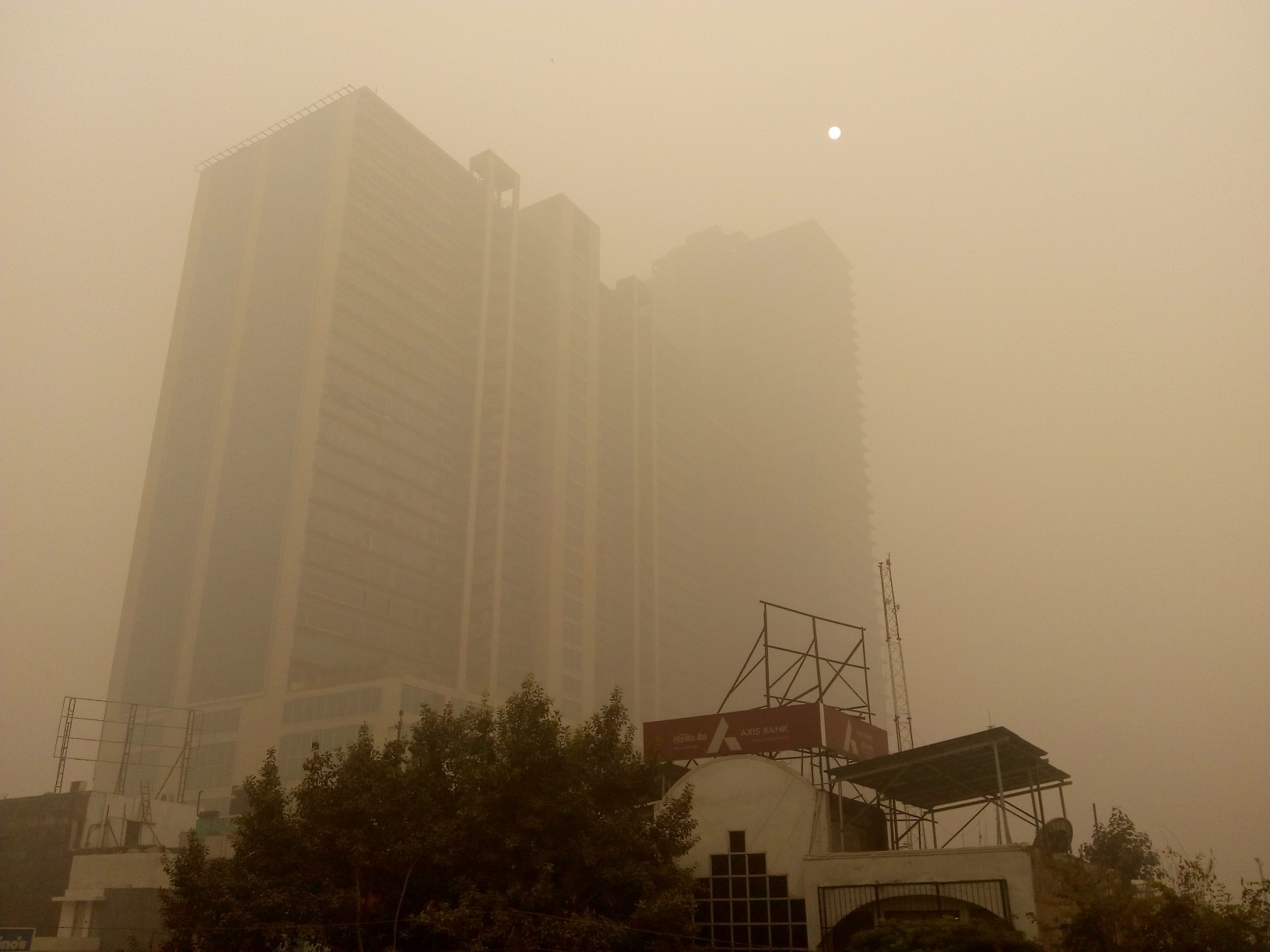
Source: Sumitmpsd - Own work, CC BY-SA 4.0
Summary
Despite the need to limit climate change and transition to low-carbon energy, there is disagreement about how to share the burden of reducing CO2 emissions. Different approaches to global mitigation are assessed in this paper, accounting for three key factors: avoided climate harms, health (co)benefits from improved air quality, and the economic cost of CO2 policies. The approaches are then ranked according to different preferences for inter-generational and intra-generational equity.
Methods
We compare a reference scenario to three scenarios that limit warming to 2°C: one through least cost, one that shifts mitigation burden towards higher-income countries (referred to as the international equity scenario), and a third that is identical to international equity, but within which low-income and middle-income countries (LMICs) also adopt air quality policies to reduce air pollution to the levels that occur in least-cost. Emissions and policy costs are modelled with Global Change Analysis Model, air quality with GEOS-Chem, health impacts with the Global Exposure Mortality Model, and climate benefits with Greenhouse Gas Impact Value Estimator.
Findings
Climate action to limit global warming to 2°C results in more than 13·5 million avoided premature deaths from air pollution between 2020 and 2050, mostly in middle-income countries. Opting for the least-cost scenario rather than international equity reduces the mitigation burden for LMICs but also reduces their health co-benefits by several million deaths, highlighting a trade-off between mitigation effort (an important component of climate justice) and the urgent need to reduce environmental health burdens in LMICs. The extent to which equity is prioritised determines what to do about that trade-off; as more priority is given to lower-income countries, the international equity scenario is preferred. The most favourable scenario is the combined international equity and air quality scenario, whereby higher-income countries pay more climate mitigation costs, and LMICs use the cost savings to implement conventional air quality controls that offset foregone health co-benefits.
Interpretation
Justice-centred climate mitigation strategies must ensure that LMICs do not miss an opportunity to realise transformative reductions in air pollution.