Navroz K Dubash and Bronwen Morgan

The Rise of the Regulatory State of the South: Infrastructure and Development in Emerging Economies
Summary
Understanding the regulatory state of the south, and particularly forms of accommodation to political pressures, could stimulate a broader conversation around the role of the regulatory state in both north and south.This volume seeks to provoke such a discussion by empirically exploring the emergence of regulatory agencies of a range of developing countries across Asia, Africa, and Latin America. The cases focus on telecommunications, electricity, and water: sectors that have often been at the frontlines of this transition. The central question for the volume is: Are there distinctive features of the regulatory state of the South, shaped by the political-economic context of the global south in the last two decades? To assist in exploring this question, the volume includes brief commentaries on the case studies from a range of disciplines: development economics, law and regulation, development sociology, and comparative politics. Collectively, the volume seeks to shape the contours of a productive inter-disciplinary conversation on the emergence of a significant empirical phenomenon – the rise of regulatory agencies in the developing world – with implications both for the study of regulation and the study of development.
 Download the Study

Related Publications

Reports
Climate Policy
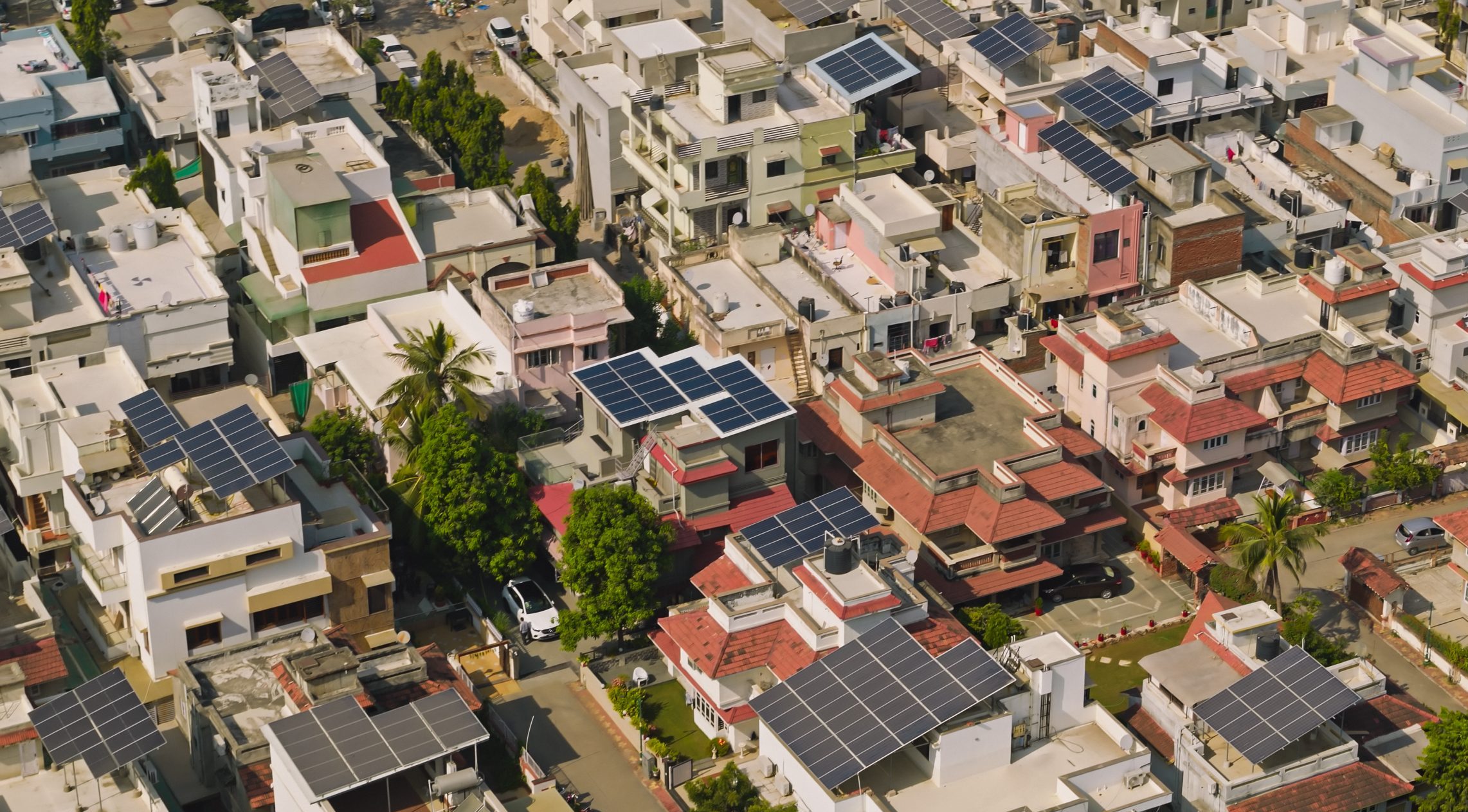
How Can India Align Its Clean Energy Innovations with Its Ambitions? An Assessment of Public RD&D Investments and Activities
Kashmeera Patel, Easwaran J Narassimhan, and Aman Srivastava
15 October 2026
This report examines India’s public clean energy RD&D investments across six key technologies to assess whether public cleantech RD&D innovations align with its broader clean energy, industrial, and climate ambitions.

Climate Policy
Climate Litigation and Democratic Governance in India
Shibani Ghosh
International IDEA | 5 October 2026
Climate litigation is emerging as an important avenue for addressing environmental harms and strengthening accountability in India. As climate-related challenges intensify, courts are increasingly being called upon to consider how constitutional rights, environmental protection, and democratic governance intersect. This case study examines the evolving climate litigation landscape in India and explores its implications for public participation, access to justice, and government accountability. It is part of a series on climate litigation and democracy in Asia and the Pacific, which examines how legal action is shaping participation, accountability, and rights-based responses to climate change.
Opinions
Environmental Governance and Policy
Post Facto Environmental Clearance: Whose fault Is It Anyway?
Himanshu Pabreja and Neha Miriam Kurian
Live Law | 24 August 2026
The Supreme Court recently ruled that it may grant environmental clearances ex post facto in exceptional cases where violations serve a genuine public interest. While this addresses regularisation schemes, it does not address another question: how did violations of this scale go undetected in the first place?