Summary
For more than three decades now, the Indian courts have delivered far-reaching judgments on a range of significant environmental matters. In their effort to adjudicate complex disputes with serious environmental repercussions, involving the interplay of multiple social, economic and political factors, the courts have developed a framework of environmental rights and legal principles, which now forms an integral part of Indian environmental jurisprudence. The judiciary invokes this framework creatively to identify constitutional, statutory and common law obligations of public and private actors to protect the environment, and to enforce the performance of related duties. There is, however, limited in-depth study of these crucial rights and principles in existing legal literature.
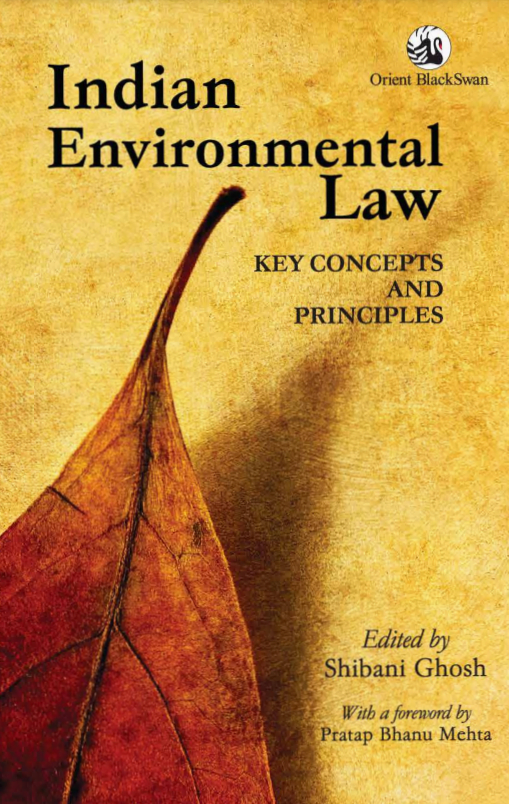
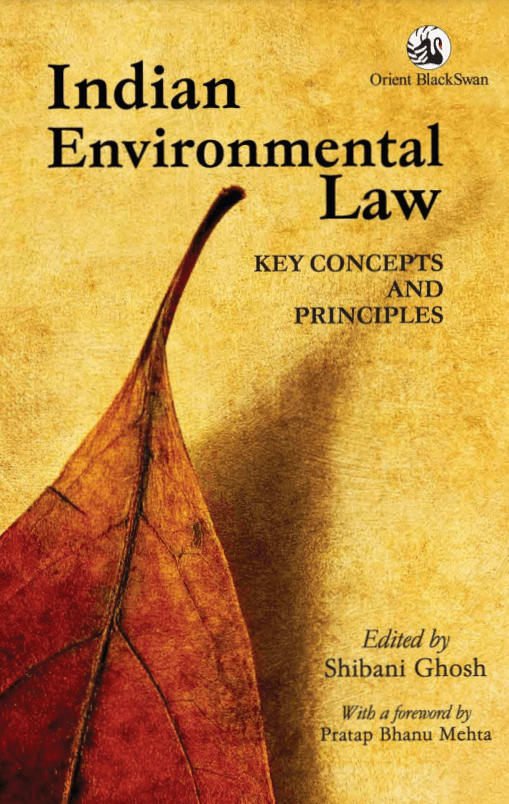
Indian Environmental Law: Key Concepts and Principles fills this gap through its critical analysis of the evolution of this environmental legal framework in India. It studies the origins of environmental rights, substantive and procedural, and the four most significant legal principles— principle of sustainable development, polluter pays principle, precautionary principle and the public trust doctrine—and elaborates how Indian courts have defined, interpreted and applied them across a range of contexts.
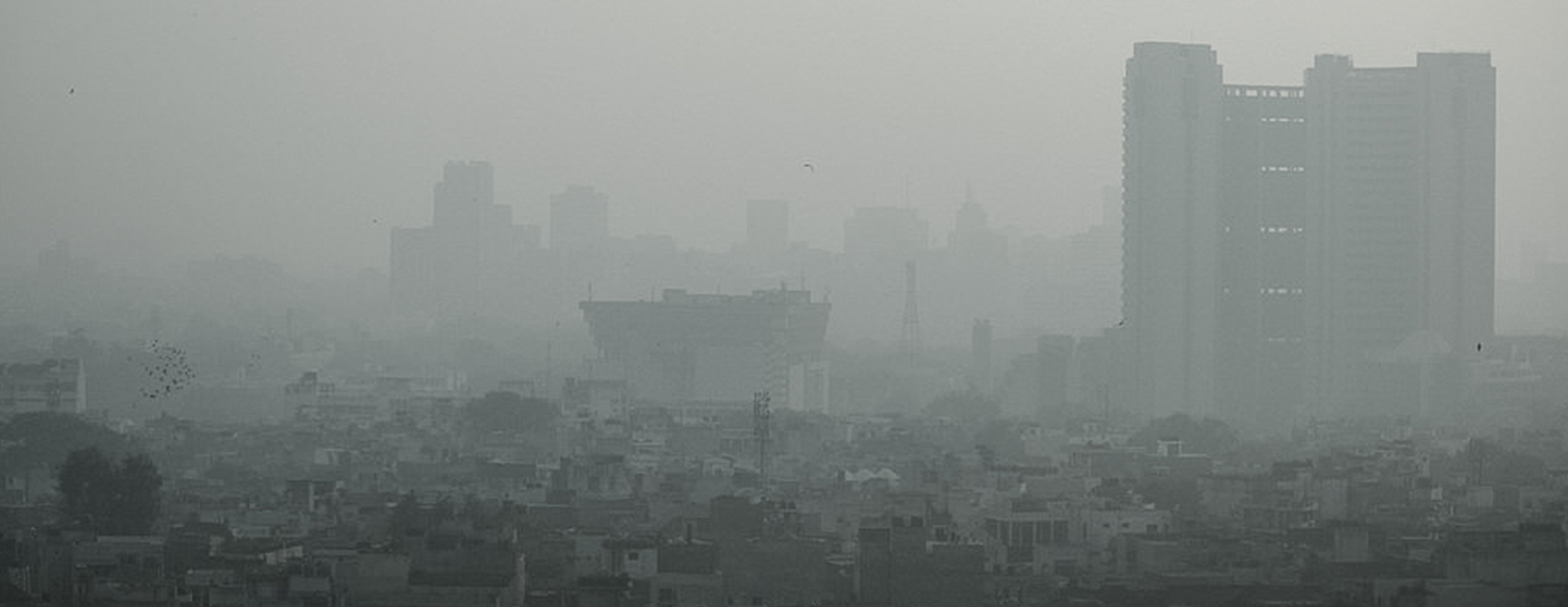
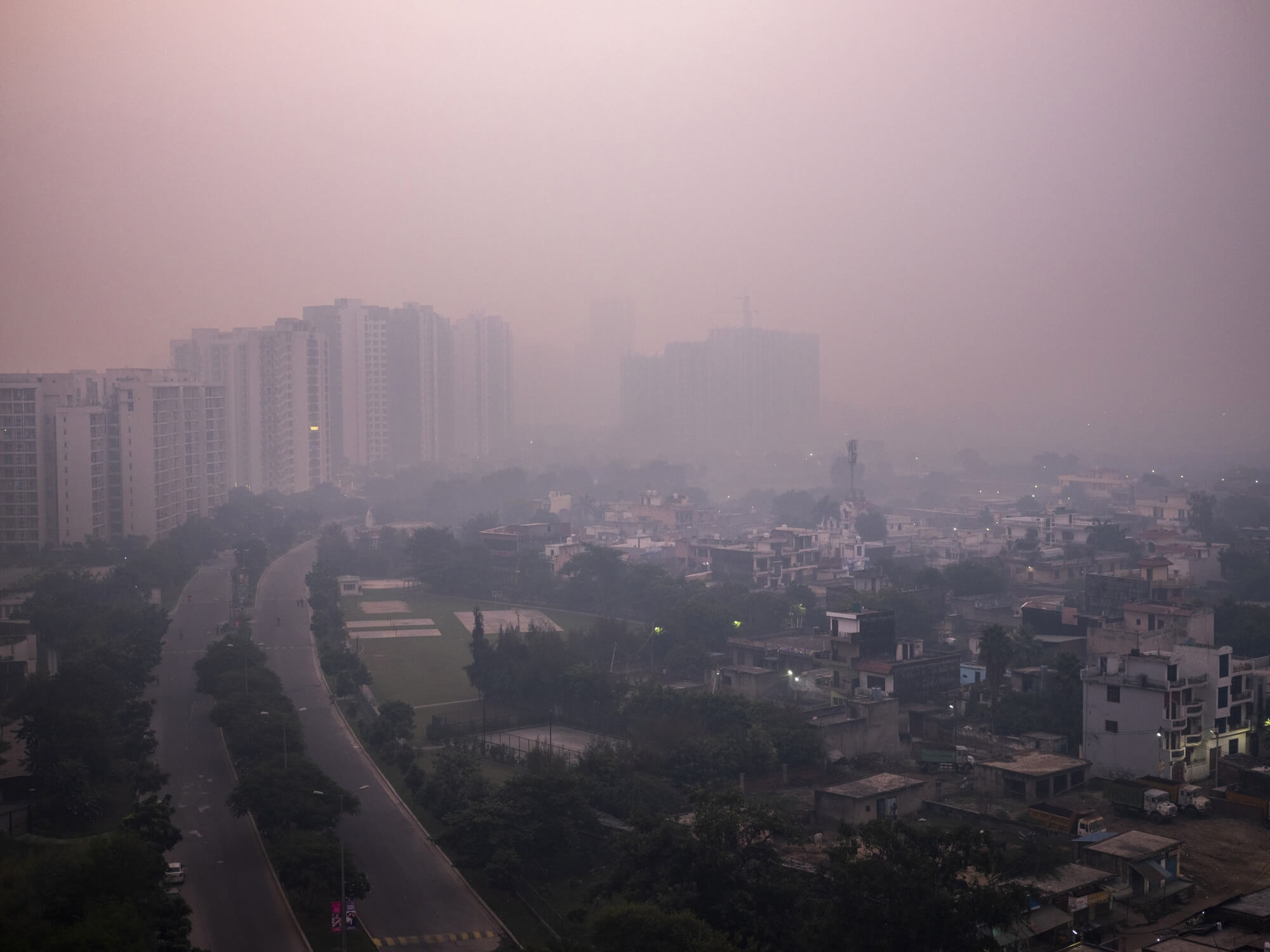
As environmental litigation and legal adjudication struggle to respond to worsening environmental quality in the country, conceptual clarity about the content, application and limitations of environmental rights and legal principles is crucial for the improvement of environmental governance. With chapters written by Saptarishi Bandopadhyay, Lovleen Bhullar, Shibani Ghosh, Dhvani Mehta and Lavanya Rajamani, this book explores the judicial reasoning and underlying assumptions in landmark judgments of the Supreme Court, the High Courts and the National Green Tribunal, and aims to provide the reader with a comprehensive understanding of the framework of rights and principles.
Download the book here.
Indian Environmental Law: Key Concepts and Principles has been reviewed by The Hindu and Down to Earth. To learn more about this book, read the chapter descriptions below.
Chapter 1: The Judiciary and the Right to Environment in India: Past, Present and Future
By Lovleen Bhullar
Bhullar discusses the evolution of the right to environment as a substantive right in Indian environmental law. Drawing from judgments of different fora, she identifies the linkages made by the Indian judiciary between environmental protection and the Constitution, specifically Articles 21, 47, 48A and 51A(g). She finds the courts to have adopted a predominantly anthropocentric approach to environmental protection, with occasional recognition of the right of the environment. While the path of evolution of the right to environment, and its realization, has been problematic, Bhullar argues that the inherent imprecision of the right, while unfortunate in some cases, allows courts the flexibility to adapt their directions to a given fact situation, often in the interest of the environment.
Chapter 2: Procedural Environmental Rights in Indian Law
By Shibani Ghosh
Ghosh examines three procedural environmental rights – the right to information, the right to public participation, and the right to access to justice – in detail, and identifies loopholes and limitations in the adjudication of each right. In particular, the chapter refers to relevant provisions of the Environment (Protection) Act 1986, the EIA Notification 2006, the Right to Information Act 2005, the Forest Rights Act 2006, and the National Green Tribunal Act 2010. Ghosh concludes that despite statutory expression of procedural environmental rights, there is no room for complacency as these three rights are routinely curtailed and denied.
Chapter 3: Sustainable Development and Indian Environmental Jurisprudence
By Saptarishi Bandhopadhyay
Bandhopadhyay critically analyses the principle of sustainable development, as interpreted and applied by the Indian judiciary. The chapter provides a succinct description of the historical evolution of the principle internationally. It analyses the Vellore judgement to distill the Indian Supreme Court’s definition of the principle, and examines the Narmada judgement to reveal how the Supreme Court has ‘instrumentally harnessed the vagueness inherent in sustainable development’. Bandopadhyay concludes that while the interpretive flexibility of the principle diminishes the extent to which litigants and lawyers can expect the Court to justify its determinations, this flexibility is not necessarily undesirable, as it leaves the field of legal argumentation and political struggle relatively open.
Chapter 4: The Polluter Pays Principle: Scope and Limits of Judicial Decisions
By Lovleen Bhullar
Bhullar discusses the origin of the polluter pays principle in Indian judicial decisions, and poses five questions to understand how the Indian courts have operationalised it – who is the polluter; how and when is the application of the principle triggered; how is the loss assessed and compensation determined; what does the polluter pay; and finally, what are the limits of the principle. She concludes that while the flexible way in which the Indian judiciary has operationalised the principle has allowed different aspects of the principle to be fleshed out in each case, it has also led to courts speaking in contradictory voices.
Chapter 5: The Precautionary Principle
By Lavanya Rajamani
Rajamani explores the conceptual underpinnings of the precautionary principle, tracing its definition, interpretation and legal status in international law, before turning to Indian law. She argues that the application of the principle in the Vellore judgement is at odds with the Supreme Court’s own definition of the principle. The chapter discusses this lack of clarity in the Court’s engagement with the principle, and the blurring of lines between two distinct legal principles – precaution and prevention. Rajamani concludes that the invocation of the indigenous version of the precautionary principle may be instrumentally useful in arriving at environmentally favourable judicial outcomes, but it does not bode well for the development of a clear line of jurisprudence.
Chapter 6: Public Trust Doctrine in Indian Environmental Law
By Shibani Ghosh
Ghosh traces the growth and application of the public trust doctrine, and explains why it is difficult to identify how the doctrine could lend predictability to decision-making regarding public trust properties. She explains the contours of the doctrine as inferred from Indian judicial pronouncements – the source of the doctrine, properties that are held in public trust, and principles that are applied by courts while implementing the doctrine. Rather than insisting on its redundancy, she argues that it is desirable to make the doctrine more relevant, and proposes ways in which it may afford greater protection to natural resources held in trust.
Chapter 7: The Judicial Implementation of Environmental Law in India
By Dhvani Mehta
Mehta provides an overview of the compliance and enforcement mechanisms available to environmental regulatory authorities in India, and then, with references to case law (many of which rely on the four legal principles in this book), illustrates the implementation mechanisms developed by the Indian courts. She concludes that judicial implementation mechanisms have had mixed success. Apart from external factors, there are certain internal weaknesses that impact the implementation process: courts have been inconsistent while deploying implementation mechanisms, their orders require more robust legal reasoning and they need to integrate better with the existing regulatory framework.
Read more