
Environmental Governance and Policy
Geoengineering
“Stabilising” the Climate, but for Whom? Reflections from Reykjavík, and Questions for India
27 October 2026

The summit was held at the Harpa Concert Hall and Conference Centre in Reykjavík, Iceland. Image: Bhargav Krishna
In mid-October, I spent two days in Reykjavík at the Global Risk and Stabilization Summit at the invitation of Renaissance Philanthropy. It brought together scientists, funders, entrepreneurs, policymakers, and a handful of representatives (primarily researchers) from the Global South to discuss catastrophic climate risks and what the emerging field of climate stabilisation could do about them.
I went in with more questions than answers. I wasn’t sure if these interventions could be governed thoughtfully, or whether the people who would bear their risks the most would have any say. I went, however, because these questions will hit places like India the hardest, and because the conversations about them are largely being shaped in the Global North. This blog is a collection of personal reflections, and SFC’s work in this regard is anchored by my colleagues Arunesh Karkun and Himanshu Pabreja, whose thoughtful inquiry helped us enter this space.
The conversations were anchored around the belief that the world is on course for around 3°C of warming. The recently released emissions gap report pegs future warming within this century at 2.6°C, but global investment banks are already stress-testing for a 3°C world. Emissions mitigation and carbon removal, speakers argued, will not be sufficient to pull us out of this trajectory, and adaptation can only confer a level of security from climate risks before it becomes economically unviable. What was needed, they said, was the development of a further category of response — deliberate interventions in the Earth system such as reflecting sunlight and refreezing glaciers — to be developed now, so they are ready if they are ever needed to stabilise the Earth’s climate.
Why India is already in this conversation
India has more reasons than most to pay attention. Aerosols, the fine particles that make up much of our air pollution, already shape our climate by scattering sunlight and altering clouds, thereby reducing the warming over the country that climate change would otherwise cause. One study argues that over the Indo-Gangetic plain, the impact of aerosol loading may contribute to a 0.5-1℃ reduction in temperatures, and another documented the increase in warming during COVID-19 lockdowns. The Economist has glibly described the trade-off between increased warming and 1.67 million deaths from air pollution as “choking less and frying more”.
There is no scenario in which the public health emergency of air pollution is an acceptable price to mitigate additional warming. What the debate does show, however, is that decisions on air quality are also decisions about climate change. Rejecting the false dichotomy between “choking” and “frying” would mean recognising that cleaning up the air and reducing emissions are both necessary for India to meet its development goals.
However, India has, in effect, already traded away cleaner air for other priorities, though not for climate reasons. Sulphur dioxide limits for coal power plants, notified in 2015 with a 2017 deadline, were extended four times; in July 2025, about 78% of units were exempted outright, and another 11% may be exempted case by case. This kicks the can down the road. It accepts the health burden of sulphate air pollution (the primary focus of the 2015 standards) as the price of cheap power to fuel development, a false trade-off, given the rapidly declining price of electricity generated from renewable sources and the rising cost of coal power. It also defers rather than avoids the question of what happens to warming when India’s air does get cleaner.
Internationally, including at the summit, India’s decarbonisation and pollution abatement policies are increasingly viewed as a source of future regional warming that needs to be accounted for, although estimates of what the aerosol cleanup would contribute to global temperatures are uncertain.
Unplanned experiments
The world has also recently run an unplanned experiment on this. In 2020, the International Maritime Organization cut the sulphur levels allowed in shipping fuel from 3.5% to 0.5%, and the clouds over busy shipping lanes, especially in the Pacific, became less reflective. How much this has added to warming is still to be fully understood. One modelling study puts it at just under 0.05°C over the decade; a preprint still under review argues that models underestimate the effect two- to four-fold; and research presented at the summit suggested it brought warming forward by as much as a decade.
Either way, aerosols act as a lever on global temperatures. Remove them, and warming is unmasked; disperse them into the stratosphere at scale, and the planet cools. This is the physical basis of stratospheric aerosol injection, one of the foundational pillars of a stabilisation strategy.
The Government of India has taken notice, aided by international academics engaged in this field. NITI Aayog’s Annual Report for 2025–26 announced a working group to evaluate the science, risks, and governance of solar radiation modification and recommend measures for India’s preparedness. That is welcome, but two features stand out. Its scope is solar radiation modification alone, not the wider set of interventions, including glacier and marine cloud brightening, which would be of significance for India. Its membership and terms of reference have not been made public, so we do not officially know who, and on what terms, is shaping India’s first official thinking on a subject with consequences for every farmer who depends on the monsoon, and every Indian downstream of their harvest. There is also little evidence, global or Indian, on what decoupling CO2 from temperature, or changing the quality of sunlight, would mean for biodiversity, carbon sinks, and ecosystems.
A field in a hurry
Three things stood out about the conversations in Reykjavík.
First, this is a field preparing to grow, and fast. The aim is to grow from roughly a thousand people currently to 5 or 10 thousand in a decade, with dedicated journals, patient capital, and institutional funding. Philanthropic money is already flowing, and national programmes are following, most prominently the UK Advanced Research and Invention Agency’s £56.8 million programme.
The field also wants a permanent place in climate policy, as a third pillar alongside mitigation and adaptation. The field’s leaders point to the history of adaptation, which was once dismissed as a distraction from cutting emissions, or carbon dioxide removal (CDR), which was viewed as a moral hazard. Yet the IPCC now considers removal as unavoidable for reaching net-zero and adaptation as integral to climate-resilient development. The analogy is instructive but imperfect. Adaptation changes human systems, largely within the borders of those who choose it, and CDR acts on the carbon cycle rather than climate as a whole. These interventions, on the other hand, change the climate itself, including for people who had no say in them.
Second, the field is more candid about its science than its pitch suggests, and that deserves credit. Researchers were clear that stratospheric aerosol injection is a family of designs, differing in where, when, how high, and how much material is injected, and that models assess strategies against particular baselines, not “the effects” of the technology. As one presentation put it, models cannot predict governance or human behaviour at all. Several scientists also argued for stronger governance of their own work, in a room where a common view was that the field already faces too much scrutiny and too little work on the ground.
Third, governance was named the biggest challenge, yet discussions stayed abstract, and implementers engaged only minimally. The most concrete proposals were a coalition of first-mover countries setting collective norms among themselves. Some argued that seeking global consensus at a time of geopolitical fissures amounts to a de facto ban. Platforms such as the new Solar Geoengineering Research Governance Platform are building useful tools for responsible research: charters, disclosure, and independent review. But, as far as I am aware, there is no parallel effort to examine whether such research is politically viable, that is, whether governments and publics in the places that would bear the consequences would accept it. Even the most developed research roadmaps, modelled on the phased go/no-go gates of clinical trials, leave open the most important question – who sets the criteria for passing each gate, and whether the countries that would live with the consequences have any say in them.
Is it really “stabilisation”?
The summit’s own vocabulary also deserves scrutiny. Stabilisation is an appealing word. It evokes a patient in an emergency room, stabilised before the underlying illness is treated (an analogy often used at the conference). But it names an intended outcome rather than an action, and so builds success into the term.
More importantly, it raises the question of for whom are we stabilising? Interventions such as stratospheric aerosol injection would, at best, be designed to hold global average temperature at some level, perhaps 1.5°C or 2°C above pre-industrial averages. In temperate, wealthy countries, that might feel like stability. For much of the Global South, already living with deadlier heat, more erratic monsoons, and more frequent extremes at today’s temperatures, locking in that level of warming is not stability. It is the continuation of harm under a reassuring name. Urgency without clarity can also foster poorly thought-through policies developed with insufficient consultation that could prove detrimental.
Holding the global mean steady also says little about regional climates. In idealised simulations at the Indian Institute of Science, injecting aerosols at 15°N, one of the most efficient latitudes for cooling the planet, cut Indian summer monsoon rainfall by about 21%, and at 30°N by about 29%. Subsequent work found that tilting the aerosol load toward the Northern Hemisphere pushes the tropical rain belt south, with northern monsoon rainfall falling about 7% for every 0.1 of imbalance in aerosol optical depth.
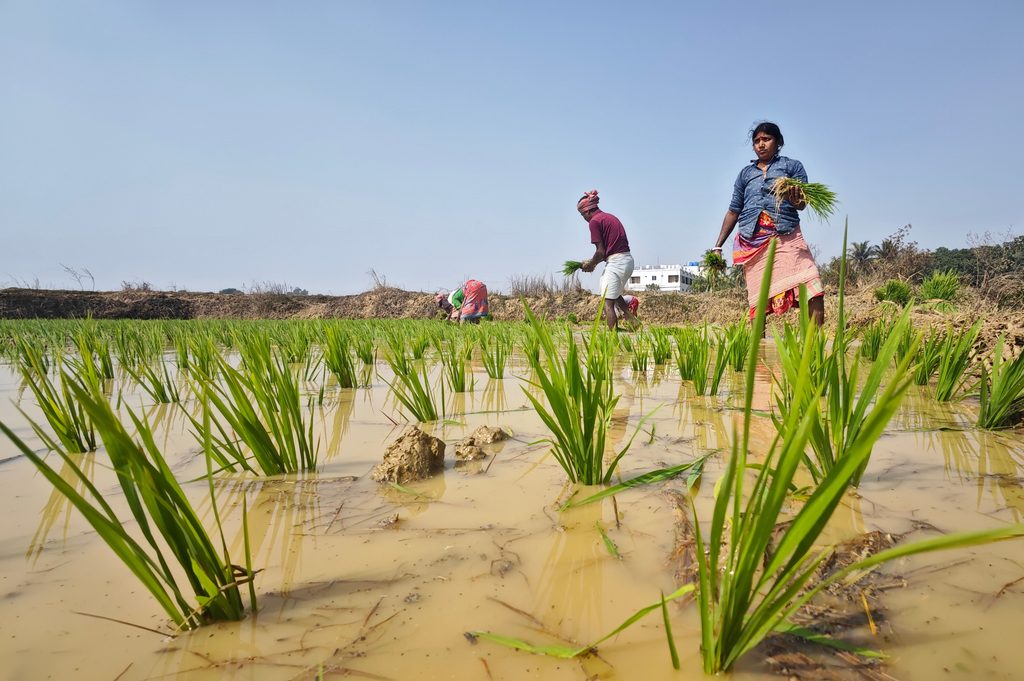
Every choice – the season, latitude, altitude – with respect to injection comes with trade-offs, with each design serving some regions’ priorities over others’. We may stabilise the world on average, but destabilise the most densely populated regions as a result. Stabilisation in this context would also speak only to global temperatures, ignoring several other planetary boundary thresholds we are currently pushing.
For these reasons, an alternate term proposed at the conference – Earth system interventions – may work better. It describes what is being done, a deliberate intervention in the Earth’s systems, without presuming that it works in a positive direction or deciding whom it works for.
What the field gets right about risk
The summit was at its best when it was communicating risk. Speakers were explicit about the limits of what they knew. Climate models, several said, project the floor of plausible change, not the ceiling. Tipping points were discussed system by system, with candour that the frame fits some systems better than others and that timing is the largest uncertainty, and the wide ranges on thresholds were stated rather than brushed aside. Risk was also translated into terms decision-makers already use, from financial exposure to national security.
That contrasts with much of the wider domestic discussion of tipping points, including around UNEP’s recent Limiting Overshoot report. Overshooting 1.5°C brings tipping points closer, and regional disasters are already manifesting that reality in South Asia. Yet, discourse around what has to be done is still either anchored around global carbon budgets and the space within it that India needs to develop, or on building adaptation capabilities for risks that we haven’t yet begun to quantify.
Balancing development and climate goals is vital, but treating overshoot as something to be settled at the negotiating table or simply adapted around understates the risks it carries. Identifying the Earth systems most at risk for India, stating the confidence intervals around those risks, and being clear about what we do and don’t know would be a first step in working out what overshoot means for our development trajectory.
The same honesty should apply to the urgency on display at the summit. Uncertainty about when thresholds are crossed cuts both ways. It is a reason to take the risks seriously, not a reason to cut short deliberation about interventions whose own risks are still poorly understood.
The questions facing India
For India, the immediate questions are less about whether interventions should ever be deployed than about what must be in place before a research agenda takes shape. Here are a few that we believe are essential:
1. Who is framing the questions?
India needs to know what interventions would mean for the monsoon, for heat, for Himalayan glaciers, and for its crops. There is no guarantee that research funded and designed elsewhere will ask those questions.
2. What capabilities do we have?
Intervention scenarios are entering mainstream climate modelling: a stratospheric aerosol experiment is now a Fast Track experiment for the next round of model intercomparison, CMIP7. Whether India can say anything credible about what such trajectories mean for its own national context depends on regional modelling, computing, and observation capacity that has to be built now. These capabilities also extend to whether India could even detect an intervention deployed by someone else, beyond its borders, and trace its effects on our own weather.
3. Who holds the authority?
No agency in India has a clear mandate over Earth system interventions. There is no route to permit, condition, or refuse an outdoor experiment, and while NITI Aayog can advise, it has no legal foundation to permit. On the international stage, holding non-Indian actors accountable for impacts on India would require developing a novel mechanism of the sort that lacks a clear precedent. Authority also has to last. Any deployment to stabilise temperatures could run for decades, and stopping abruptly could bring termination shock. Whatever India builds will have to outlive many governments, including the one that sets it up.
4. Who gives consent?
India’s experience with agricultural technologies shows that expert backing and approval at the Union government level do not amount to public acceptance. Agriculture and water are state subjects under the Constitution, so even if the Union holds formal jurisdiction over international negotiations on Global South coalitions, any credible process will have to run through the states, not around them. These processes will also have to include relevant civil society stakeholders and community-based organisations. Informed consent is also feasible only in the context where everybody has access to appropriate information on costs and benefits, impacts, and uncertainties. Information asymmetry would further weaken the basis for any consent taken in this regard.
5. Whose costs count?
A utilitarian would ask whether solar radiation modification’s total benefits to India, chiefly relief from extreme heat for its enormous workforce, outweigh its total harm. A Rawlsian would instead focus on how you would compensate the worst off; the farmer whose crop fails due to a weaker monsoon, or a downstream state suffering water shortages due to a decline in rainfed river water. In that context, compensation becomes a precondition, rather than an afterthought. India already faces a $1.8 billion per year crop insurance outlay to bolster a flailing agricultural sector. Making up for losses that could be blamed on intervention(s), climate change or natural variability would be far harder. Which moral test India applies will decide what costs it accounts for before saying yes.
6. How transparent should the State be?
Who advises the government, with what affiliations and funding, under what terms of reference, and with what public input? Disclosing the composition and mandate of the NITI Aayog working group would be a simple first step; a public register of research and outdoor activity would be another. A 2023 IISc-led survey of Indian experts found strong support for transparency, public consultation, disclosure of research, and an interministerial oversight committee.
Choices for the Global South
These questions are not India’s alone. Across the Global South, three choices are coming into view.
The first is between participation and observation. Being invited into the room is not the same as having the research capacity to challenge what is said in it. Institutions in the Global South received about $3.5 million of tracked funding for solar radiation modification research through 2024, around 2% of the total. Without capacity, participation risks being seen as an endorsement.
The second is timing. Coalitions of the Willing are being proposed. Joining early offers influence, but building positions independently first offers leverage. African environment ministers, taking no view of the position they reached, have shown that a region can set its own terms on its own timetable as they reaffirmed their rejection of stratospheric aerosol injection and called for a non-use agreement in 2025.
The third is honesty about differences. Interventions would produce winners and losers within the Global South, not just between the South and the North. Modelling suggests, for instance, that cooling the tropics could shift malaria risk between Global South regions rather than simply reduce it. “The Global South” will not speak with one voice, and should not be expected to.
Where I’ve landed for now
I went to Reykjavík with the hunch that these were interventions we didn’t currently have the capability to govern, and so probably shouldn’t engage in. What I learned left me more concerned than before about the governance gaps, and more certain that India needs to build its own research and regulatory capabilities to take an informed global stance on the subject. The money and momentum behind this field will ensure that India will have to take a view on whether we want to engage or not, and the question is whether we do so with a fuller understanding of the implications for our people and economy.
That takes more than just research capacity. It takes institutions that can permit, refuse and monitor activity at home; processes that facilitate informed consent for states, farmers and communities before decisions are made; and sustained dialogue with other countries in the Global South that share our exposure, so that questions like detection and accountability aren’t left to those who would deploy. All of this would enable us to take a considered view on what next steps to take.
What comes next
We at SFC aim to take these questions forward, starting with an issue brief on what India would need in place with respect to capabilities, institutions, and law, before an Earth system interventions research agenda takes shape.
We do not yet have the answers, and we are wary of anyone who claims to. But choices about who asks the questions, who funds the answers, and who gets to say no are being made now, often by default. We would rather have India make them deliberately, and welcome the conversation.
The author would like to thank Arunesh Karkun and Himanshu Pabreja for their comments that strengthened this piece.