Sarada Prasanna Das, Ashwini K. Swain, and Catherine Ayallore

The Energy Transition in Irrigation: A Case Study on Community Solar Irrigation in Chhattisgarh
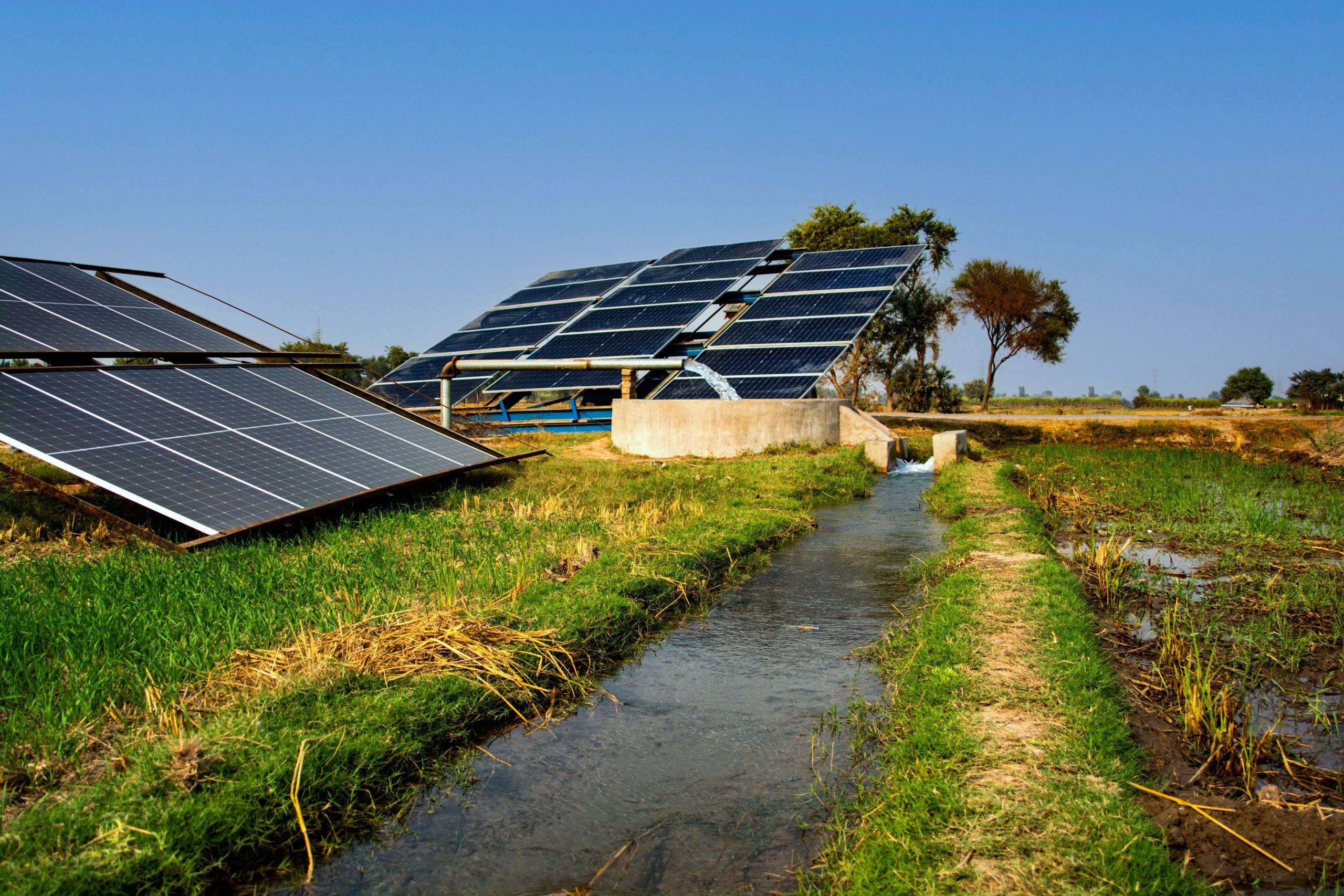
Source: WRI India
Highlights
– Solarisation as a catalyst for the energy transition: With irrigation accounting for one-fifth of India’s total energy demand, solarisation has become a critical policy instrument for decarbonising the agricultural sector. Chhattisgarh is supporting this transition by implementing India’s first large-scale, state-supported Community Solar Irrigation Scheme (CSIS).
– Enhancing energy access and productivity: Transitioning to solar-powered community models enhances energy access, ensuring that the benefits of reliable power reach those beyond the centralised grid. Chhattisgarh’s CSIS has brought irrigation to 2,851 hectares of land in remote forest and hilly regions, directly benefiting 2,740 marginal and small farmers.
– Resource efficiency and financial sustainability: A successful energy transition in agriculture requires moving away from recurring consumption subsidies to durable infrastructure investments. Chhattisgarh achieves this through a distinctive financial convergence model, bundling funds from local and line department budgets.
– Potential to drive cross-sectoral livelihood gains: Projects such as community solar irrigation can serve as a gateway for broader rural transformation, including an increase in the crop cycle, diversification to high-value crops, and potentially non-farm income generation if surplus power can be tapped and used for local productive activities other than irrigation. For example, women’s self-help groups (SHGs) are growing vegetables in the rabi season and can explore the productive use of surplus solar power for non-agricultural activities during off-seasons.
– Social infrastructure and institutional innovation for scalability: The global shift towards renewable energy requires robust local institutions to manage shared resources. Chhattisgarh’s model proves the efficacy of the state–society–market alliance, where the state provides sustained institutional hand-holding and technical support to the community infrastructure through a network of ‘system integrators’ to ensure the long-term functionality and scalability of decentralised energy assets.
 Download the Study


Related Publications

Opinions
Energy Transitions
Rural Energy Must Deliver More Than Connections
Sarada Prasanna Das
BasisPoint Insight | 13 November 2026
India's rural energy transition will remain incomplete if electricity connections do not translate into better lives and stronger livelihoods. Rural energy policy must focus on productive uses, reliable supply and local institutions to turn electricity access into economic opportunity. The measure of success should be whether these systems sustain useful services and expand economic opportunity long after they are installed.
Opinions
Energy Transitions
Towards the next frontiers in India’s energy transition
Sarada Prasanna Das and Shubhranshu Suman
Ideas for India | 5 October 2026
Non-fossil installed power capacity now constitutes a significant share of India’s total installed power capacity. In this post, Das and Suman argue that the next stage of India’s energy transition requires greater attention to system integration and the actual contribution of clean energy to electricity generation – while also recognising the broader socioeconomic opportunities that the transition can create.
Books and book chapters
Energy Transitions
Urban Energy Transition in India: Reimagining Cities as Catalysts for 21st Century Energy Transition
Ashwini K. Swain and Sarada Prasanna Das
Routledge | 31 August 2026
India's rapid urbanisation implies that a significant part of its energy demand growth will come from its cities. While cities have traditionally been importers of energy, the 21st century energy transition presents a unique opportunity for them to play an active role in shaping the national energy future.