Diana Ürge-Vorsatz, Sergio Tirado Herrero, Navroz K Dubash and Franck Lecocq

Measuring the Co-benefits of Climate Change Mitigation
Summary
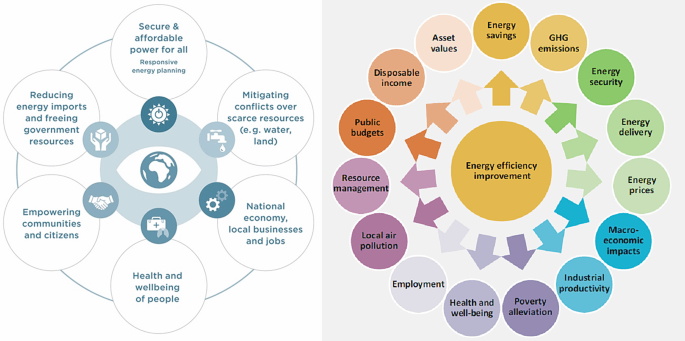
Co-benefits rarely enter quantitative decision-support frameworks, often because the methodologies for their integration are lacking or not known. This review fills in this gap by providing comprehensive methodological guidance on the quantification of co-impacts and their integration into climate-related decision making based on the literature. The article first clarifies the confusion in the literature about related terms and makes a proposal for a more consistent terminological framework, then emphasizes the importance of working in a multiple-objective–multiple-impact framework. It creates a taxonomy of co-impacts and uses this to propose a methodological framework for the identification of the key co-impacts to be assessed for a given climate policy and to avoid double counting. It reviews the different methods available to quantify and monetize different co-impacts and introduces three methodological frameworks that can be used to integrate these results into decision making. On the basis of an initial assessment of selected studies, it also demonstrates that the incorporation of co-impacts can significantly change the outcome of economic assessments. Finally, the review calls for major new research and innovation toward simplified evaluation methods and streamlined tools for more widely applicable appraisals of co-impacts for decision making.
 Download the Study

Related Publications

Reports
Climate Policy
How Can India Align Its Clean Energy Innovations with Its Ambitions? An Assessment of Public RD&D Investments and Activities
Kashmeera Patel, Easwaran J Narassimhan, and Aman Srivastava
15 October 2026
This report examines India’s public clean energy RD&D investments across six key technologies to assess whether public cleantech RD&D innovations align with its broader clean energy, industrial, and climate ambitions.

Climate Policy
Climate Litigation and Democratic Governance in India
Shibani Ghosh
International IDEA | 5 October 2026
Climate litigation is emerging as an important avenue for addressing environmental harms and strengthening accountability in India. As climate-related challenges intensify, courts are increasingly being called upon to consider how constitutional rights, environmental protection, and democratic governance intersect. This case study examines the evolving climate litigation landscape in India and explores its implications for public participation, access to justice, and government accountability. It is part of a series on climate litigation and democracy in Asia and the Pacific, which examines how legal action is shaping participation, accountability, and rights-based responses to climate change.

Issue Briefs
Climate Policy
India’s Electric Vehicle Ecosystem: Stuttering Transition or Strategic Reorientation?
Arunesh Karkun, Kashmeera Patel, Aman Srivastava, and Easwaran J Narassimhan
11 August 2026
An analysis of the evolution of India’s EV policy landscape, the current state of domestic manufacturing, and the strengths and limitations of its RD&D ecosystem.