
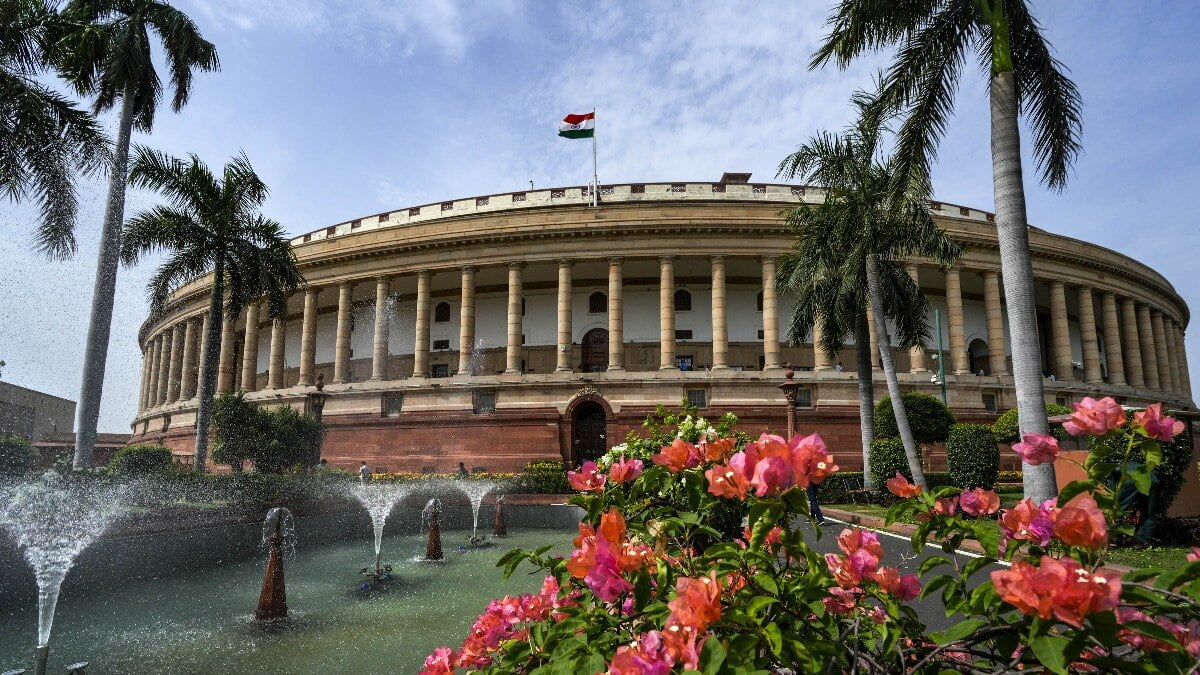
This chapter, published in ‘India in a Warming World: Integrating Climate Change and Development’, Oxford University Press, sets the stage for a discussion on policies by reviewing the emergence of national policies and national institutions. This discussion starts with the National Action Plan on Climate Change (NAPCC) and its various Missions. It discusses how Indian climate policy was frequently dictated by the pursuit of ‘co-benefits’ that bring both climate and development gains, and the emergence of a multiple objectives framing as a useful guide for policy formulation. This leads to a discussion of the formulation of India’s NDC for the Paris Agreement. Significantly, the chapter also covers the spread of climate institutions, which while weak and in their early stages, provide the spaces within which climate discussion is likely to be mainstreamed, if at all, in coming years.
Read moreResearch area: Climate Policy
India’s Evolving Climate Change Debate: From Diplomatic Insulation to Policy Integration
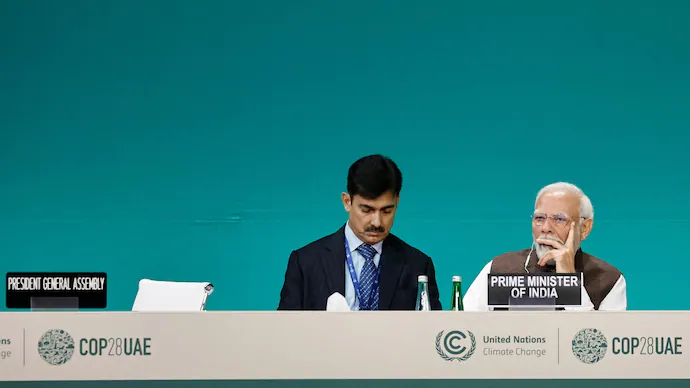
How is India engaging the climate change challenge? This introductory chapter in ‘India in a Warming World: Integrating Climate Change and Development’, Oxford University Press, explains the changing context for climate change debates in India, from one focused on diplomatic concerns of equity and responsibility for the problem, to one equally concerned with understanding its development implications. The chapter lays out the rationale for why the book examines climate change impacts, negotiations, politics, policies and integration across sectors, briefly discussing key themes. It ends with four overarching messages on the contours of the Indian climate debate.
Read moreMore priorities, more problems? Decision-making with multiple energy, development and climate objectives
Summary
The Sustainable Development Goals and the Paris Agreement pose new conceptual challenges for energy decision makers by compelling them to consider the implications of their choices for development and climate mitigation objectives. This is a nontrivial exercise as it requires pragmatic consideration of the interconnections between energy systems and their social and environmental contexts and working with a plurality of actors and values. There are an increasing number of indices, frameworks and academic studies that capture these interconnections, yet policy makers have relatively few ex-ante tools to pragmatically aid decision-making. This paper, based on a collation of 167 studies, reviews how multi-criteria decision approaches (MCDA) are used in energy policy decisions to explicitly consider multiple social and environmental objectives, and the conceptual usefulness of doing so. First, MCDA can be used to distil a finite set of objectives from those of a large number of actors. This process is often political and objectives identified are aligned with vested interests or institutional incentives. Second, MCDA can be used to build evidence that is both qualitative and quantitative in nature to capture the implications of energy choices across economic, environmental, social and political metrics. Third, MCDA can be used to explore synergies and trade-offs between energy, social and environmental objectives, and in turn, make explicit the political implications of choices for actors. The studies reviewed in this paper demonstrate that the use of MCDA is so far mainly academic and for problems in the Global North. We argue for a mainstreaming of such a multi-criteria and deliberative approaches for energy policy decisions in developing countries where trade-offs between energy, development and climate mitigation are more contentious while recognizing the data, capacity and transparency requirements of the process.
Read moreIndia and Climate Change: Evolving Ideas and Increasing Policy Engagement
Summary
India is a significant player in climate policy and politics. It has been vocal in international climate negotiations, but its role in these negotiations has changed over time. In an interactive relationship between domestic policy and international positions, India has increasingly become a testing ground for policies that internalize climate considerations into development. This article critically reviews the arc of climate policy and politics in India over time. It begins by examining changes in knowledge and ideas around climate change in India, particularly in the areas of ethics, climate impacts, India’s energy transition, linkages with sustainability, and sequestration. The next section examines changes in politics, policy, and governance at both international and national scales. The article argues that shifts in ideas and knowledge of impacts, costs, and benefits of climate action and shifts in the global context are reflected and refracted through discourses in India’s domestic and international policies.
Read moreExperience with carbon taxes and greenhouse gas emissions trading systems

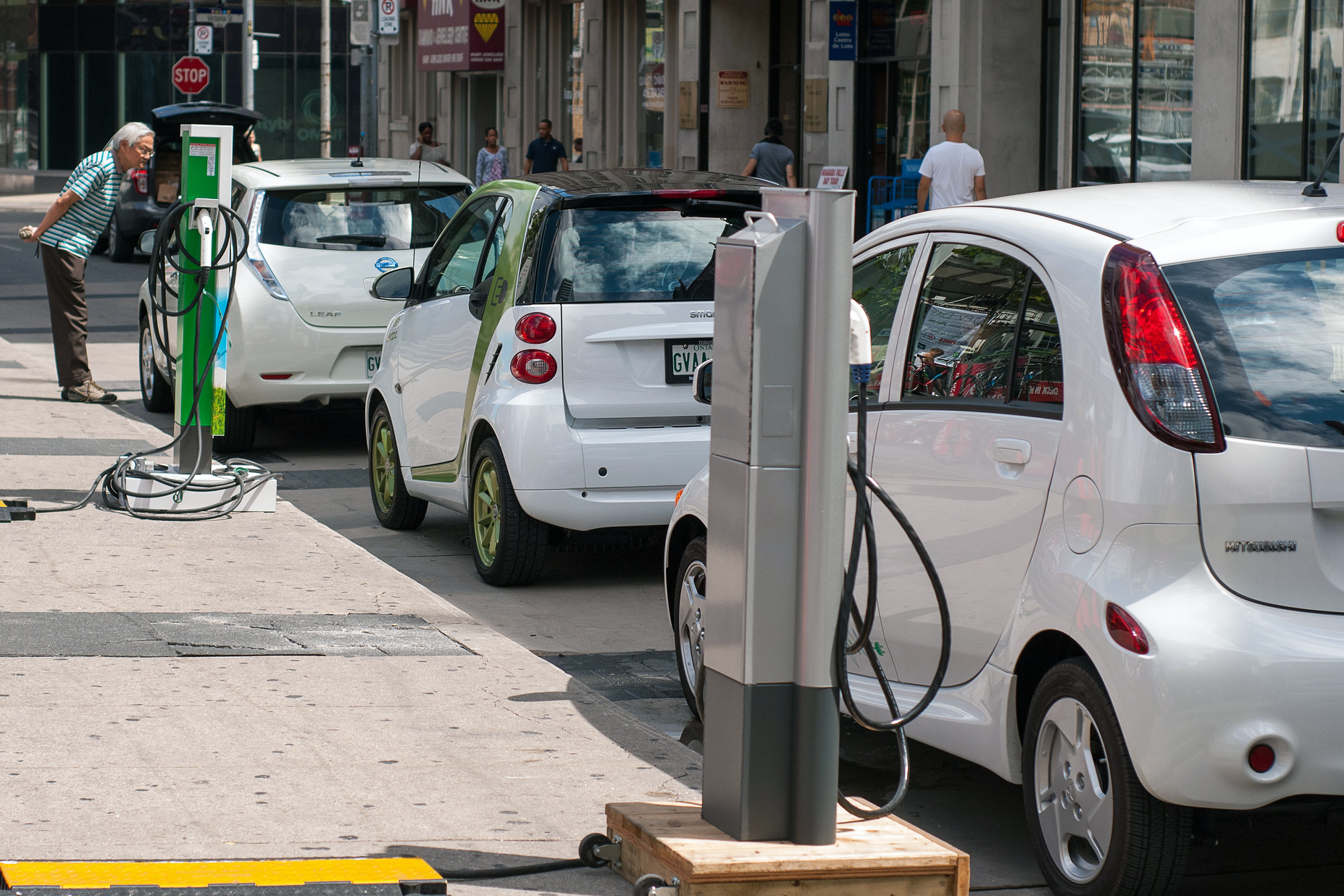
The role of demand-side incentives and charging infrastructure on plug-in electric vehicle adoption: analysis of US States
National climate change mitigation legislation, strategy and targets: a global update
Summary
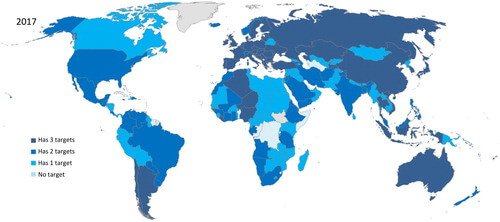
Global climate change governance has changed substantially in the last decade, with a shift in focus from negotiating globally agreed greenhouse gas (GHG) reduction targets to nationally determined contributions, as enshrined in the 2015 Paris Agreement. This paper analyses trends in adoption of national climate legislation and strategies, GHG targets, and renewable and energy efficiency targets in almost all UNFCCC Parties, focusing on the period from 2007 to 2017. The uniqueness and added value of this paper reside in its broad sweep of countries, the more than decade-long coverage and the use of objective metrics rather than normative judgements. Key results show that national climate legislation and strategies witnessed a strong increase in the first half of the assessed decade, likely due to the political lead up to the Copenhagen Climate Conference in 2009, but have somewhat stagnated in recent years, currently covering 70% of global GHG emissions (almost 50% of countries). In comparison, the coverage of GHG targets increased considerably in the run up to adoption of the Paris Agreement and 89% of global GHG emissions are currently covered by such targets. Renewable energy targets saw a steady spread, with 79% of the global GHG emissions covered in 2017 compared to 45% in 2007, with a steep increase in developing countries.
Read moreIndia’s energy and emissions future: An interpretive analysis of model scenarios
Introduction
As a significant emitter of greenhouse gases, but also as a developing country starting from a low emissions base, India is an important actor in global climate change mitigation. However, perceptions of India vary widely, from an energy-hungry climate deal-breaker to a forerunner of a low carbon future. Developing clarity on India’s energy and emissions future is challenged by the uncertainties of India’s development transitions, including its pathway through a demographic and urban transition within a rapidly changing policy context. Model-based scenario analyses provide widely varying projections, in part because they make differing assumptions, often implicit, about these transitions. To address the uncertainty in India’s energy and emissions future, this letter applies a novel interpretive approach to existing scenario studies. First, we make explicit the implied development, technology and policy assumptions underlying model-based analysis in order to cluster and interpret results. In a second step, we analyse India’s current policy landscape and use that as a benchmark against which to judge scenario assumptions and results. Using this interpretive approach, we conclude that, based on current policies, a doubling of India’s CO2 energy-related emissions from 2012 levels is a likely upper bound for its 2030 emissions and that this trajectory is consistent with meeting India’s Paris emissions intensity pledge. Because of its low emissions starting point, even after a doubling, India’s 2030 per capita emissions will be below today’s global average and absolute emissions will be less than half of China’s 2015 emissions from the same sources. The analysis of recent policy trends further suggests a lower than expected electricity demand and a faster than expected transition from coal to renewable electricity. The letter concludes by making an argument for interpretive approaches as a necessary complement to scenario analysis, particularly in rapidly changing development contexts.
Read moreWhose carbon is burnable? Equity considerations in the allocation of a “right to extract”
Introduction
Carbon emissions—and hence fossil fuel combustion—must decline rapidly if warming is to be held below 1.5 or 2 °C. Yet fossil fuels are so deeply entrenched in the broader economy that a rapid transition poses the challenge of significant transitional disruption. Fossil fuels must be phased out even as access to energy services for basic needs and for economic development expands, particularly in developing countries. Nations, communities, and workers that are economically dependent on fossil fuel extraction will need to find a new foundation for livelihoods and revenue. These challenges are surmountable. In principle, societies could undertake a decarbonization transition in which they anticipate the transitional disruption, and cooperate and contribute fairly to minimize and alleviate it. Indeed, if societies do not work to avoid that disruption, a decarbonization transition may not be possible at all. Too many people may conclude they will suffer undue hardship, and thus undermine the political consensus required to undertake an ambitious transition. The principles and framework laid out here are offered as a contribution to understanding the nature of the potential impacts of a transition, principles for equitably sharing the costs of avoiding them, and guidance for prioritizing which fossil resources can still be extracted.
Read more