Heat Action Plans: A Cautionary Note and a Way Forward

Introduction


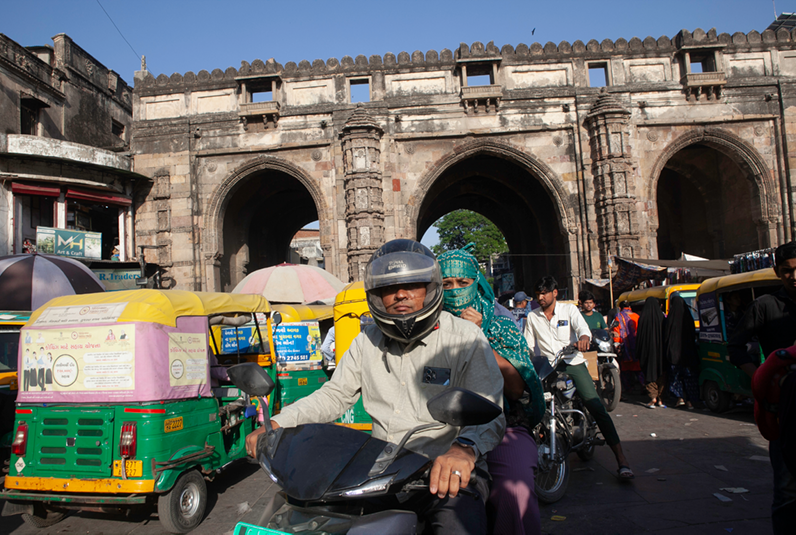
Heat extremes have given rise to a new tool in public policy: the heat action plan. They define when and how the state should react to extreme heat and feature a script of actions that stretch across the breadth of government machinery. They are ambitious in scope, linking science, early warning systems, emergency aid, infrastructure change and coordinating institutions together.

Reviews of heat plans in democracies across the world suggest that they generally lack legislative or financial backing, which makes them less likely to be implemented. A recent analysis of the implementation of heat plans in India, a country recognised as an early mover in heat planning, showed that the plans focus on important short-term emergency responses to heat (such as on water stations or on the designation of public cooling), while falling short in the implementation of long-term structural changes such as increasing shade coverage, changing building codes, or preparing the grid for future cooling demand.

An important area of future research is to find how common this focus on the short-term is across developing countries, where larger shares of the population are heat-exposed, and state capacity is low. While the contents of heat action plans have been reviewed across regions, far fewer studies examine their implementation. Social scientists and policy researchers must offer closer inspections of their actual effects on historical rhythms of summertime governance.

This essay is part of the white paper, ‘Critical Perspectives on Extreme Heat in India’ by the Salata Institute’s Climate Adaptation in South Asia research cluster.


Read more

How Hot Is Too Hot?

Summary


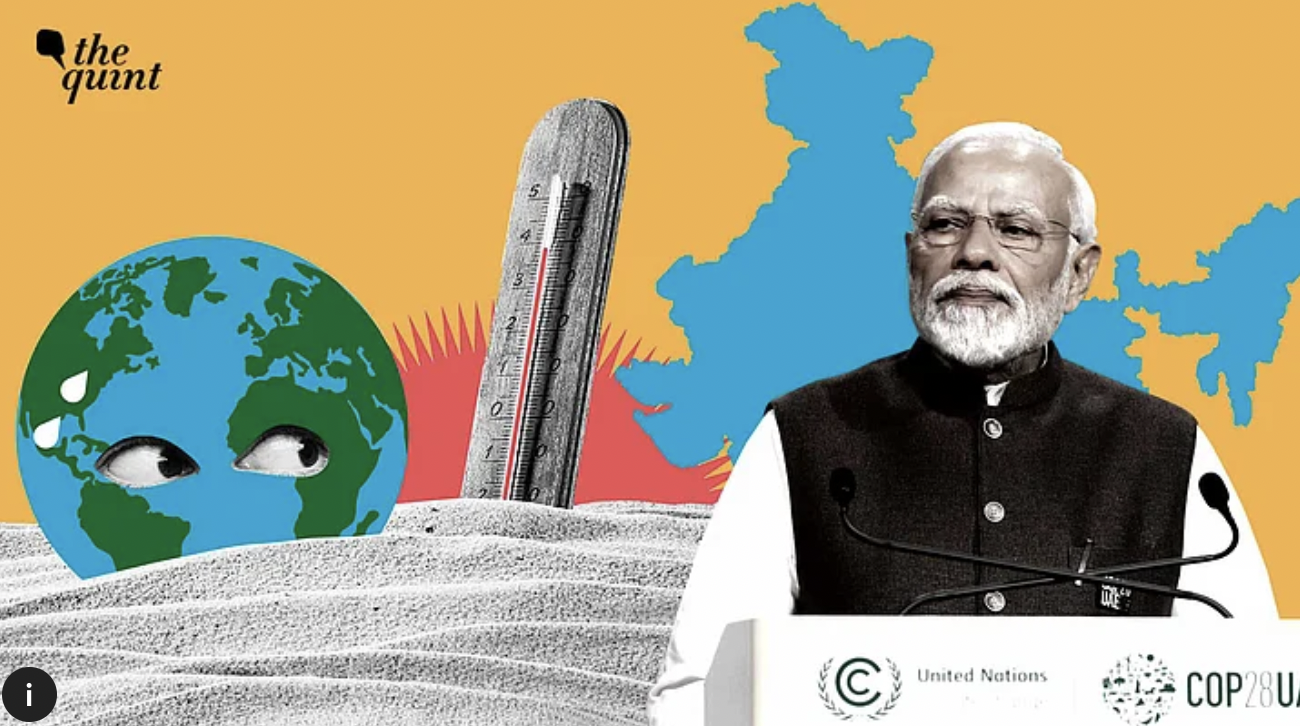
Extreme heat is an increasingly regular feature of India’s climate, catalysing governments, public health agencies, and civil society to develop heat action plans (HAPs), policies, and emergency response measures to safeguard the public. Yet key questions remain unanswered about the thresholds that define dangerous heat and the evidence supporting interventions to mitigate its health impacts.

A central challenge in crafting any action plan or emergency response is deciding on its trigger point—the conditions above which exposure becomes hazardous and protective measures must be enacted. The most intuitive answer to the question “how hot is too hot?” is when conditions exceed the capabilities of human physiology. But this question cannot be answered without first asking, “too hot for what?” and also, “too hot for whom?” Even from a physiological perspective, these are difficult questions—and they become even more complex when translated into explicit triggers for HAPs, emergency responses, and other interventions.

A key barrier to deciding which interventions should be prioritised is a lack of data on their effectiveness, particularly in the Indian context. Even the establishment of robust evidence supporting the efficacy of an intervention does not guarantee that lives will be saved in the real world, as effectiveness can be compromised if the intervention comes with large economic costs. Identification and evaluation of solutions must therefore be heavily grounded in local context, to ensure feasibility and scalability in the long term.

This essay is part of the white paper, ‘Critical Perspectives on Extreme Heat in India’ by the Salata Institute’s Climate Adaptation in South Asia research cluster.
Read more

What is the Health Agenda for Climate Adaptation?

Introduction


Extreme heat poses the most direct and immediate threat to human health and well-being. Rising temperatures exacerbate infectious disease patterns, reduce agricultural productivity, and strain India’s already burdened health system. Without urgent investments in adaptation, escalating heat and climate impacts will outpace the capacity of India’s health infrastructure and workforce, deepening inequities across regions and populations. To frame a credible health agenda for climate adaptation, we first need to understand the limits of what we know, and why our data systems fail to capture the true scale of climate-related health impacts.

Accurately measuring the health impacts of heat is a central challenge in developing a credible climate health agenda. Building an evidence base will require local, contextually grounded research and improved epidemiological data. Timely and transparent communication of uncertainty must become a central norm in climate health modeling. Beyond scientific uncertainty, India’s ability to measure and respond to heat-health impacts is further constrained by fragmented data systems. Bridging these gaps requires both regulatory reform and a shift in mindset.

To be meaningful, the health agenda for climate adaptation must first center heat, the most pervasive and measurable stressor linking climate change and health. This essay is part of the white paper, ‘Critical Perspectives on Extreme Heat in India’ by the Salata Institute’s Climate Adaptation in South Asia research cluster.

Read more

Strengthening Coastal Resilience in India: A Multi-Hazard Approach to Adaptation Governance

Introduction


Coastal zones are the most productive and dynamic ecosystems on earth, supporting extensive economic activity, natural resources, and livelihoods. However, climate change is increasingly placing pressure on these regions through multiple interacting coastal hazards, such as sea-level rise (SLR), cyclones, storm surges, floods, and erosion. India, with an extensive coastline of approximately 11,098 km, stretching across nine states and four union territories, hosts rich marine biodiversity, diverse ecosystems, and more than 250 million people within 50 km of the shoreline. This coastline is vital to both the national and state economies, as these ecosystems underpin local livelihoods, industries, and development projects, making climate impacts on the coast particularly consequential for human well-being and economic stability.

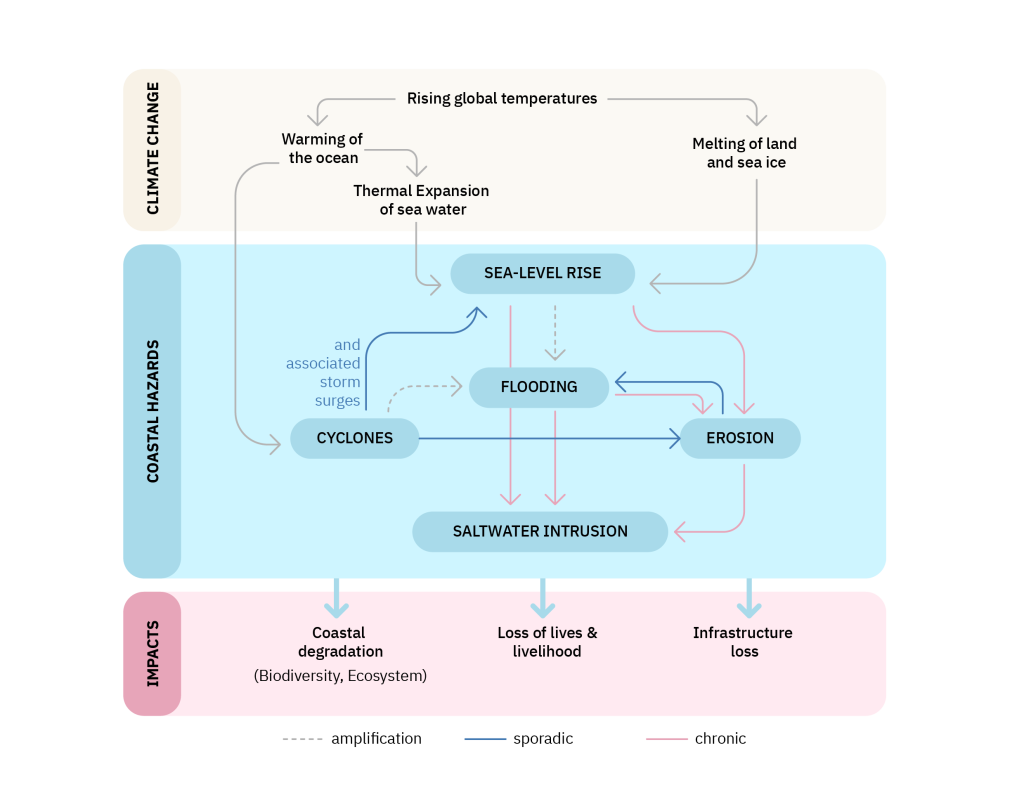
Simplified model of interactions between multiple coastal hazards. Source: Authors’ analysis.

Recent studies indicate that India’s coastal regions are experiencing accelerating trends in climate-related hazards. Observed changes include relative SLR along both the east and west coasts, increasing frequency and intensity of cyclones in the Bay of Bengal and the Arabian Sea, more frequent coastal flooding and erosion, and growing saltwater intrusion into coastal aquifers and agricultural lands. These climate-driven hazards, together with non-climatic pressures such as coastal development, population growth, subsidence, and shoreline modification, are collectively transforming India’s coastal regions into high-risk zones and exacerbating existing social and ecological vulnerabilities. 

Managing the complex risks emerging from these hazards depends critically on how coastal governance is structured. Over the past decade, India has taken important steps to assess climate vulnerability and develop adaptation measures for coastal regions through initiatives such as the National Coastal Mission (NCM) under the National Action Plan on Climate Change (NAPCC), and vulnerability assessments supported by the National Centre for Coastal Research. However, vulnerability assessments and adaptation planning remain focused on single hazards and are often implemented in silos. This fragmented approach overlooks the cascading and compounding nature of coastal hazards and limits the effectiveness of risk mitigation. 

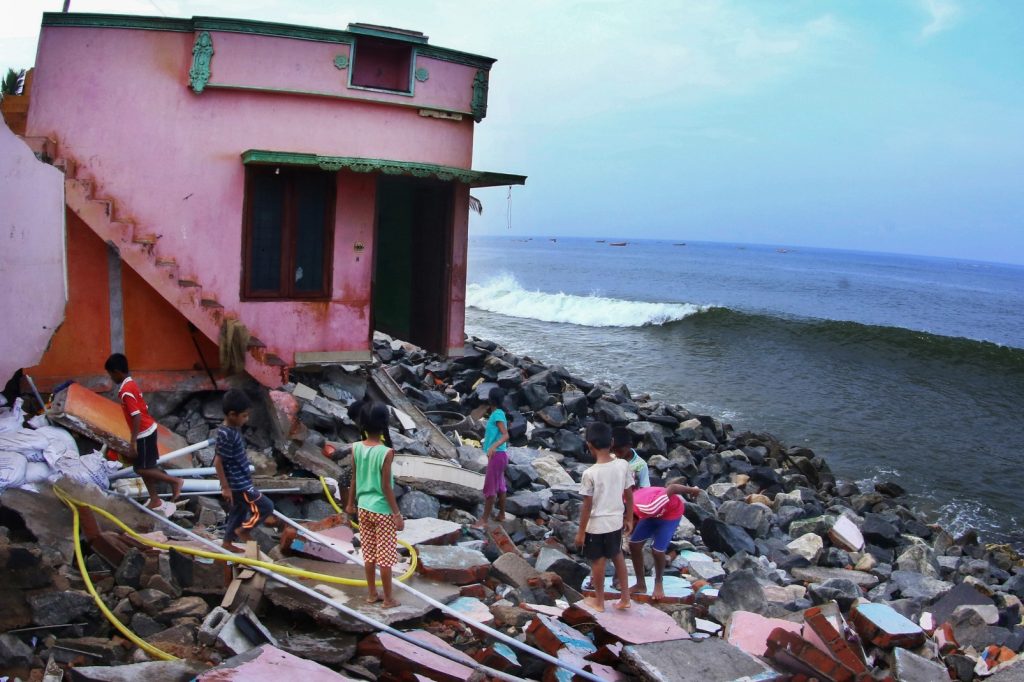
House destroyed by sea surge in Valiyathura, Kerala. Credits: Prasoon Kiran.

A significant body of literature shows that interactions between acute coastal hazards, such as cyclones and storm surges, and chronic coastal hazards, such as SLR, amplify impacts across social and ecological systems. Hence, continued reliance on single-hazard planning can result in blind spots and maladaptation. 

In this issue brief, we highlight why strengthening coastal resilience in India requires moving beyond single-hazard planning and adopting an integrated understanding of interacting coastal hazards. We do this in 3 parts: 
– First, by outlining key coastal hazards, their interactions, and emerging trends.
– Second, by examining India’s coastal governance landscape and its limitations;
– and finally, by proposing a shift toward a multi-hazard, systems-based approach to strengthen long-term resilience.

Read more

Global Climate Justice and the Future of Air Quality Co-Benefits in Low-Income and Middle-Income Countries: An Energy, Climate, and Health Modelling Study

Summary

Despite the need to limit climate change and transition to low-carbon energy, there is disagreement about how to share the burden of reducing CO2 emissions. Different approaches to global mitigation are assessed in this paper, accounting for three key factors: avoided climate harms, health (co)benefits from improved air quality, and the economic cost of CO2 policies. The approaches are then ranked according to different preferences for inter-generational and intra-generational equity.

Methods
We compare a reference scenario to three scenarios that limit warming to 2°C: one through least cost, one that shifts mitigation burden towards higher-income countries (referred to as the international equity scenario), and a third that is identical to international equity, but within which low-income and middle-income countries (LMICs) also adopt air quality policies to reduce air pollution to the levels that occur in least-cost. Emissions and policy costs are modelled with Global Change Analysis Model, air quality with GEOS-Chem, health impacts with the Global Exposure Mortality Model, and climate benefits with Greenhouse Gas Impact Value Estimator.

Findings
Climate action to limit global warming to 2°C results in more than 13·5 million avoided premature deaths from air pollution between 2020 and 2050, mostly in middle-income countries. Opting for the least-cost scenario rather than international equity reduces the mitigation burden for LMICs but also reduces their health co-benefits by several million deaths, highlighting a trade-off between mitigation effort (an important component of climate justice) and the urgent need to reduce environmental health burdens in LMICs. The extent to which equity is prioritised determines what to do about that trade-off; as more priority is given to lower-income countries, the international equity scenario is preferred. The most favourable scenario is the combined international equity and air quality scenario, whereby higher-income countries pay more climate mitigation costs, and LMICs use the cost savings to implement conventional air quality controls that offset foregone health co-benefits.

Interpretation
Justice-centred climate mitigation strategies must ensure that LMICs do not miss an opportunity to realise transformative reductions in air pollution.

Read more

Energy Transitions Preparedness Initiative: Transport Sector FY 23-24

Executive Summary


– As India advances towards an energy transition, actions taken in the transport sector – the fastest-growing sector in terms of energy consumption – will be crucial. Because road transport is a State List subject under India’s Constitution, state-level decisions will be critical for realising an energy transition.

– The Energy Transition Preparedness Initiative (ETPI) provides a framework to assess state-level progress towards an energy transition across India’s electricity, buildings, and transport sectors. It covers ten states that account for more than 50% of India’s transport sector emissions.

– By analysing publicly available data and reports, this study highlights the progress made by states in the base year, 2020–21.

– The study reveals that progress has been made in policy formulation around major aspects of the transport energy transition: prioritising non-motorised transport (NMT) and public transport, encouraging electric vehicle (EV) adoption, scrapping old vehicles, and promoting densification around transit hubs. However, a defined articulation of targets can guide a more focused transition.

– In converting policy to action, intent varies across states. This study highlights that the structures that can guide the focused implementation of energy transition projects are still nascent. Dedicated and consistent funding, integrated governance, and data-driven decision making can play a critical role in accelerating implementation.

Read more

Energy Transitions Preparedness Initiative: Buildings Sector FY 23-24

Executive Summary


– The Energy Transition Preparedness Initiative (ETPI) is an effort to study states’ progress towards achieving the energy transition by analysing their plans, actions, and governance processes through a set of indicators. One of the focus sectors under ETPI is buildings, which falls under state jurisdiction and is guided by state-level policies.

– The ETPI indicator framework for buildings was used in 10 states for the study period FY 2020–21 (the report was published in 2024). These states are Bihar, Delhi, Gujarat, Karnataka, Kerala, Madhya Pradesh, Maharashtra, Rajasthan, Tamil Nadu, and Uttar Pradesh. This report builds on the FY 2020–21 baseline and includes updates through FY 2023–24. The five-building sector indicators cover aspects such as Energy Conservation Building Code (ECBC) compliance and Eco Niwas Samhita (ENS) preparedness; promotion of rooftop solar photovoltaic (RT-SPV) systems, energy-efficient appliances, and energy efficiency and clean energy in public buildings; and energy efficiency and clean energy in affordable housing.

– We have used publicly available information. The goal is to highlight examples of good practice, facilitate cross-learning, and encourage the adoption of approaches suitable for state-specific contexts.

– We find that the studied states are progressing in adopting and notifying building codes. However, for successful implementation, it is important to remove local-level barriers by simplifying compliance procedures, creating a pool of experts to assist with compliance, and enhancing the awareness and capacity of institutions.

– Power distribution companies and State Designated Agencies in some of the studied states, such as Delhi, Karnataka, Kerala, and Maharashtra, are promoting energy-efficient appliances, offering an opportunity for other states to learn from these examples and adopt similar initiatives. Also, stronger market surveillance efforts are needed for the Standards & Labelling programme to drive greater market transformation.

– In state-specific affordable housing schemes and policies, little attention is paid to thermal comfort in the design and construction of projects. However, recently there have been efforts to integrate climate resilience measures into rural affordable housing projects under the Pradhan Mantri Awaas Yojana-Gramin (PMAY-G) programme.

Read more